
Modern Vertical Aluminum Slat Fence Panels Powder Coated Privacy Garden Fencing with Custom Slat Spacing
A Simple and Reliable Way to Define a Property Boundary
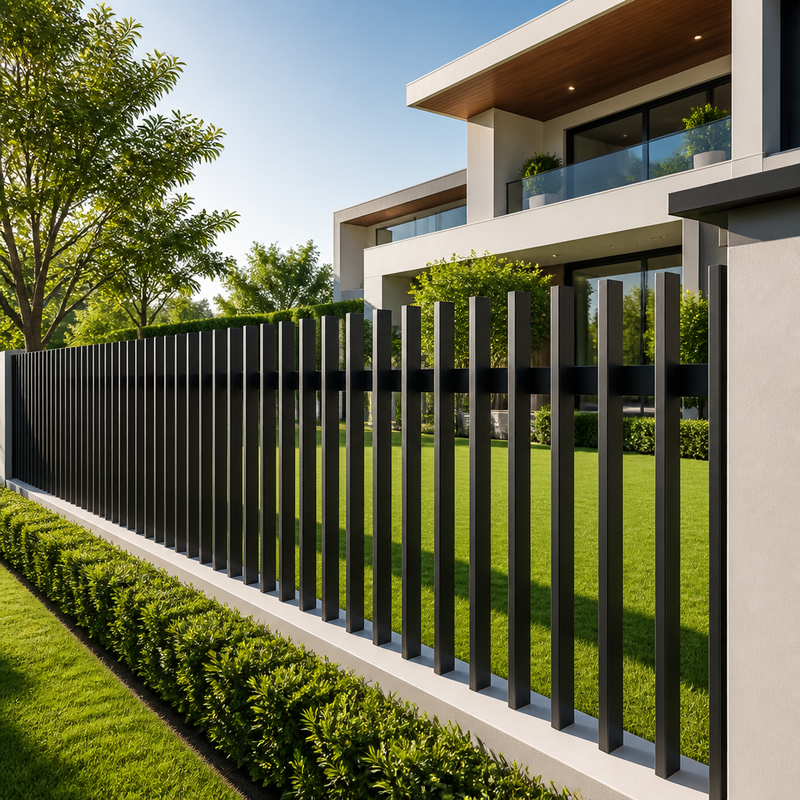
Vertical aluminum fencing is one of the most widely recognized forms of outdoor fencing.
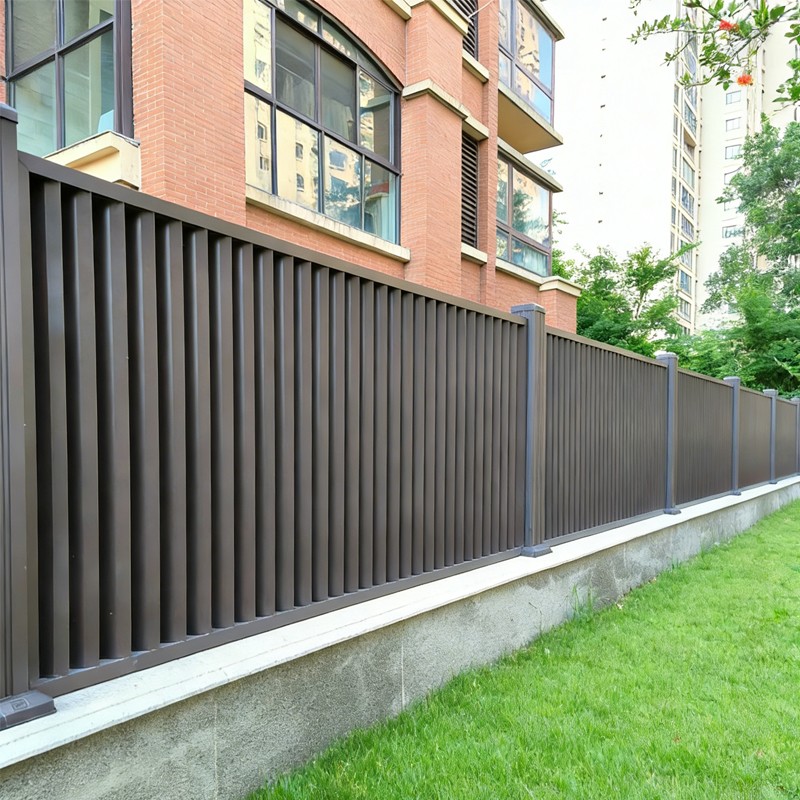
The repeated vertical profiles provide a clear physical boundary while maintaining a lighter appearance than a completely closed wall. This makes the system suitable for homes, gardens, lawns, swimming pools, schools, commercial properties and public areas.
Its straightforward structure also makes it easy to adapt panel width, height and profile spacing according to different projects.
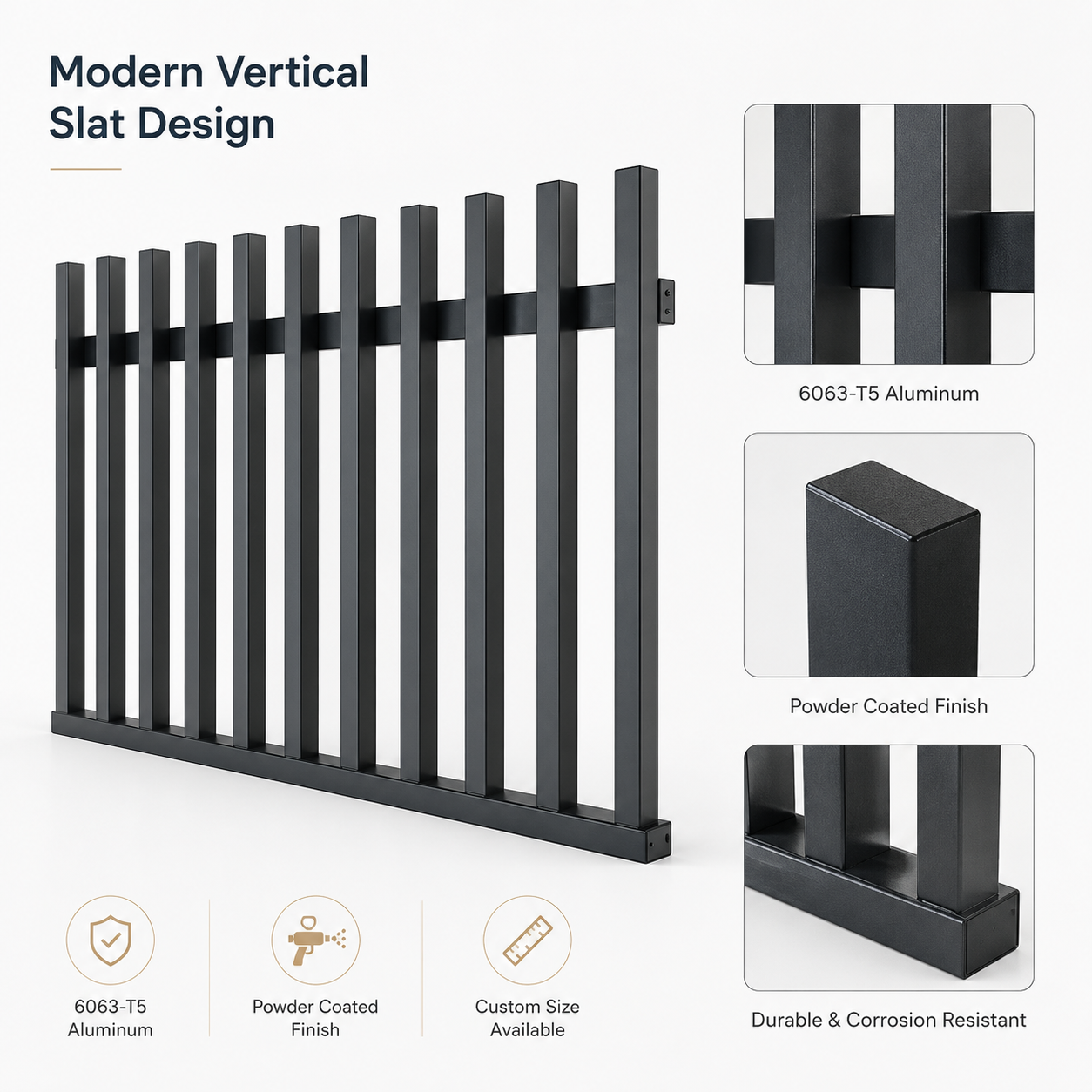
Designed Around Protection and Visibility
Vertical fencing clearly separates different areas without requiring a solid panel.
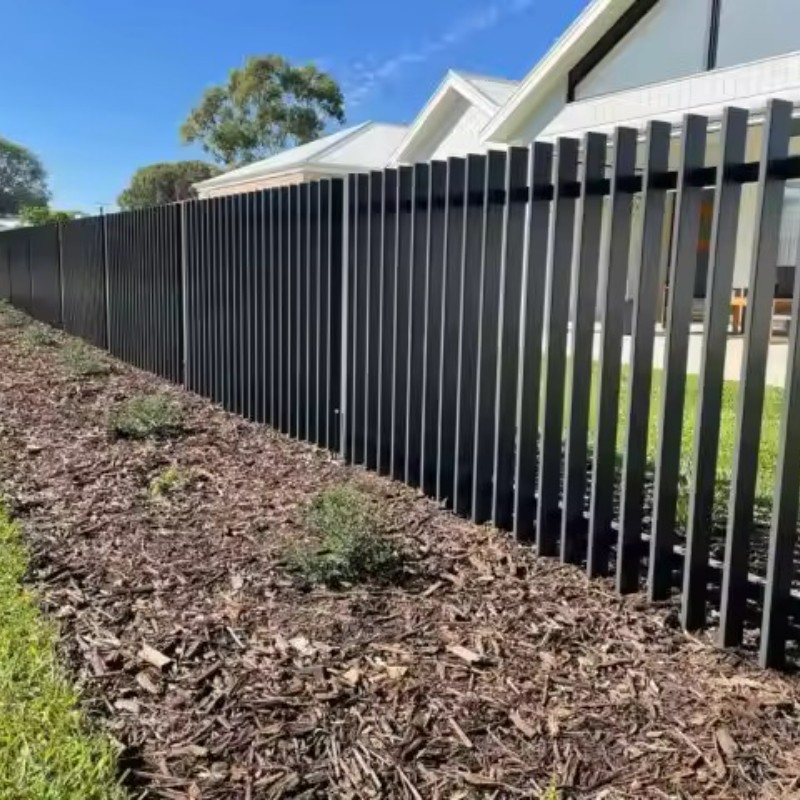
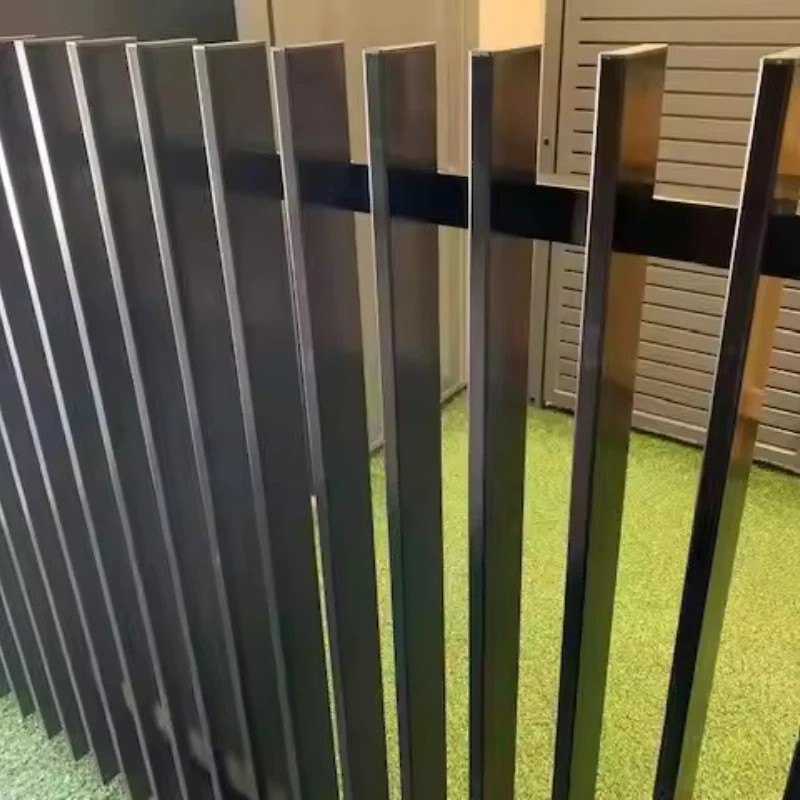
The spacing between profiles can be adjusted depending on how open or dense the boundary needs to appear. Smaller gaps may suit residential, pet or certain safety-related applications, while a more open arrangement may be preferred for garden and landscape boundaries.
The final spacing should always be considered together with the intended use of the fence.
Suitable for Different Property Conditions
Vertical fences are often installed across long boundaries, which means actual site conditions become important.
Changes in ground level, concrete walls, existing pillars, slopes and gate openings can all affect the final panel arrangement.
Rather than forcing every project into the same installation layout, the fence should be designed around the actual property.
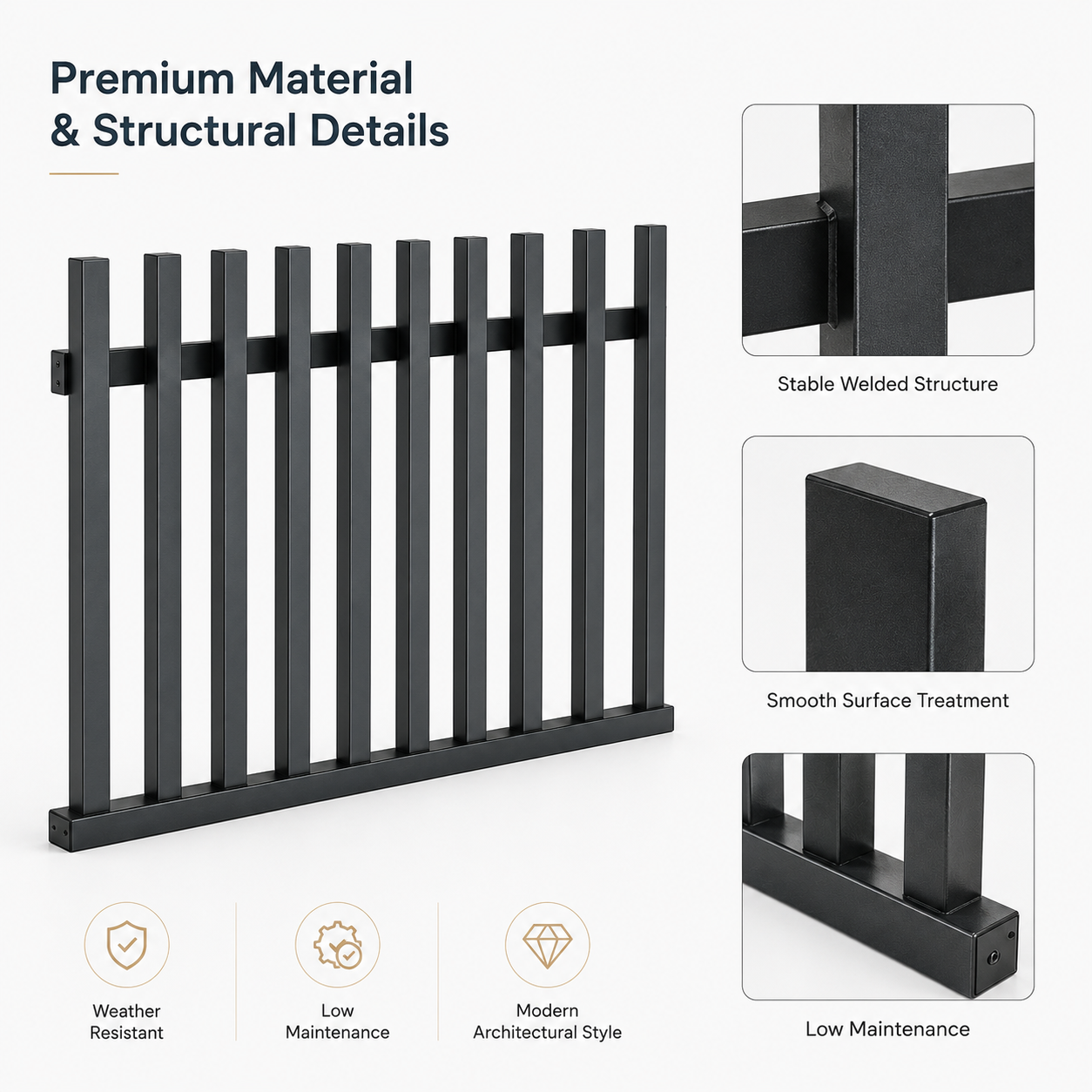
A Practical Outdoor Material
Aluminum provides a useful combination of strength, corrosion resistance and relatively low maintenance.
Unlike timber, it does not require regular staining, and unlike untreated carbon steel, it does not require repeated rust prevention.
A powder-coated finish also provides a clean exterior appearance suitable for residential and commercial environments.
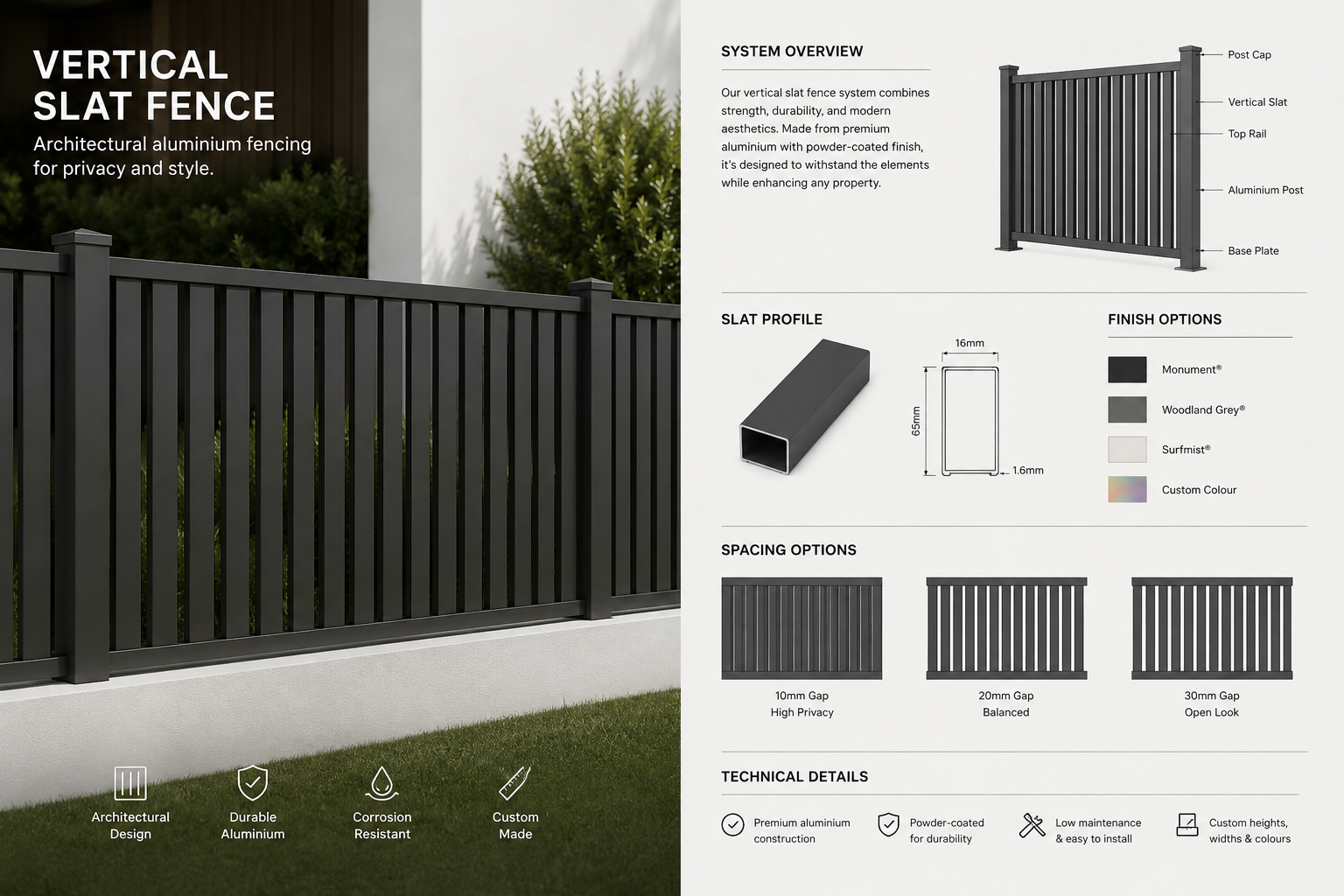
Applications
Residential gardens, lawns, villas, pool boundaries, schools, community areas, commercial sites and public-space boundaries.