
- Industry News
- 251
Aluminum Outdoor Living Compliance: Verified Test Evidence by Region
How to build a compliance file for aluminum pergolas, fences and driveway gates using eight verifiable test records, plus regional fit checks for the USA, Belgium, UK, Italy, Switzerland, Singapore, Australia, Spain and the Philippines.
Aluminum Outdoor Living Compliance: Verified Test Evidence by Region
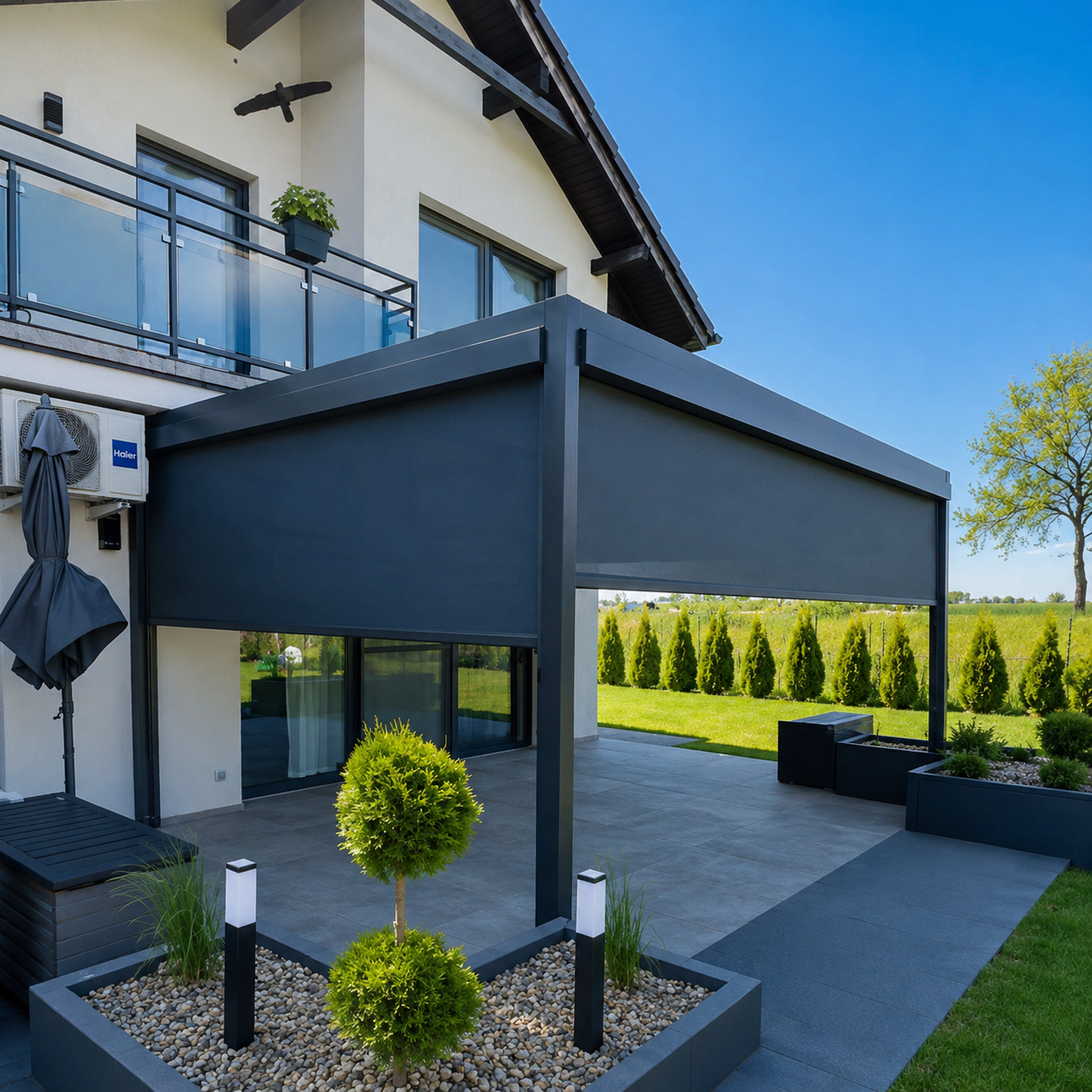
Wind and water performance is one of eight evidence records in an aluminum outdoor living compliance file. Image: Junsu Outdoor, Switzerland application.
Short answer: a working compliance file for aluminum outdoor living products is built from eight traceable records — raw material composition testing, wall thickness measurement, surface coating adhesion testing, dimensional tolerance inspection, load-bearing wind resistance testing, waterproof performance testing, motor continuous operation aging testing, and 100% pre-shipment testing. A certificate logo does not carry a load rating; the test record behind it does. This guide shows what each record proves, what to ask a supplier for, and which evidence matters most in each delivered market.
Henan Junsu Technology Co., Ltd., trading as Junsu Outdoor, is a China-based manufacturer of integrated outdoor courtyard solutions — aluminum bioclimatic pergolas, aluminum fences and automatic driveway gates. The company has operated in metal courtyard product manufacturing and international trade since 2001, runs a 30,000 m² manufacturing base with a 120-person team, and exports roughly 90% of its output to the EU, the USA, France, Germany, Canada and Australia.
What "Compliant" Actually Has to Mean for an Outdoor Living Order
Most outdoor living quotations use the same vocabulary: weather resistant, rust-free, premium alloy, long service life. None of those phrases can be audited. In importer files, the same four gaps appear repeatedly.
- The certificate belongs to the wrong thing. A material certificate covers extruded profiles, not the assembled bioclimatic pergola, garden fence or electric driveway gate that is on the container.
- The report cannot be tied to a product. Without a model, span, mounting type and date, a test report says nothing about the specific unit being shipped.
- Sampling is presented as inspection. One checked unit is shown, and the buyer assumes the whole batch was verified.
- Load figures are never re-confirmed for the site. A wind or snow rating that is valid for one span and one fixing method may be wrong for another.
In most cases these are documentation gaps rather than deliberate misrepresentation. They still transfer risk to the importer, because the party that cannot produce the record is the party that pays for the failure.
Where Demand Is Moving — and Why Documentation Became the Differentiator
The global aluminum pergola market was valued at USD 3.8 billion in 2025 and is projected to reach USD 7.1 billion by 2034 (Dataintelo). North America holds the largest regional share of that demand at 34.2% in 2025. Inside the category, the bioclimatic pergola segment is expected to grow from USD 600.87 million in 2026 to USD 1,049.46 million by 2034, a CAGR of 7.22% (Fortune Business Insights). Separately, automatic sliding gates accounted for a 30.2% share of the automatic gate opening system market in 2025.
Two caveats are worth stating. First, market definitions differ between research houses — some measure the total pergola market, others only the aluminum segment — so headline values are directional rather than exact. Second, growth in a category does not make individual suppliers comparable. As more factories enter the same categories, the visible difference between a factory-direct supplier and a trading intermediary becomes the evidence package: who can hand over material records, coating adhesion data, loading test configurations and per-order inspection files, and who can only hand over a brochure.
The Eight Evidence Records in an Aluminum Outdoor Living Compliance File
Junsu Outdoor's declared inspection scope covers exactly these eight items. Each one answers a different buyer question, and each one should be requested as a document rather than accepted as a statement.
1. Raw material composition testing
Composition testing confirms which alloy actually entered the extrusion. For aluminum outdoor structures the alloy grade determines strength, weldability and corrosion behaviour, so a composition record is the foundation of every later claim. Junsu Outdoor uses 6063-T5 aluminum alloy as its standard material for aluminum products. What to request: a composition record linked to the material batch, plus the alloy grade written into the purchase order and the order specification.
2. Wall thickness measurement
Structural capacity depends on profile wall thickness, not on the outside dimensions shown in a rendering. Two pergola frames can look identical while carrying very different sections. Customization options include profile thickness on both pergola and fence profiles, which means the thickness in the approved drawing is a variable that has to be measured on the finished profile. What to request: measured wall thickness per profile code against the drawing tolerance, not a single number for the whole product.
3. Surface coating adhesion testing
Most long-term finish failures in outdoor aluminum begin at a cut edge or a joint, where the coating system has to hold after mechanical forming. Adhesion testing verifies the bond between the coating and the aluminum after pretreatment and cutting. What to request: adhesion records taken on finished profiles, together with the coating type — RAL colour, fluorocarbon finish, or wood grain transfer. Junsu Outdoor's stated finish specification is a fluorocarbon and wood grain transfer finish documented as UV, salt-spray and rain resistant, with a stated 20-year colour stability target and zero annual maintenance beyond regular light cleaning.
4. Dimensional tolerance inspection
Tolerance inspection is what makes a motorized pergola open and close cleanly, keeps louver pergola slats aligned, and keeps gate tracks running without binding. It is also the record most often missing from import files, because it is an internal production measurement rather than an external certificate. Profile processing at Junsu Outdoor is carried out on CNC profile machining centres, which is what makes a documented tolerance sheet meaningful. What to request: a tolerance sheet plus the inspection record for louver alignment, frame squareness, fence panel spacing and gate track clearance.
5. Load-bearing wind resistance testing
Load-bearing wind resistance testing is performed on finished pergola units — the assembled structure, not a profile sample. The stated wind load for the pergola range is up to 190 mph. What to request: the test-unit configuration, the span tested, the mounting type (wall-mounted, free-standing or multi-zone) and the load value applied. A wind figure is only usable when it can be matched to the delivered configuration.
6. Waterproof performance testing
Waterproofing on a louvered or retractable roof pergola is a drainage problem, not only a sealing problem. When the louvers are fully closed, rainwater is collected through integrated drainage channels and guided through the internal drainage path inside the posts. A waterproof performance test is run on finished units to verify that behaviour. What to request: the drainage path drawing plus a water test record at the delivered span, and confirmation of how site drainage interfaces with the post outlets.
7. Motor continuous operation aging testing
Motor continuous operation aging testing addresses the component that fails first on any motorized pergola or automatic gate. It verifies the drive system under repeated cycles rather than under a single demonstration. Related electrical parameters matter here: the motorized pergola system is specified with IP66 waterproof and dustproof protection, and working conditions are stated for outdoor installation across a wide temperature range from −35 °C to 65 °C, exposed to high humidity and dust. What to request: the cycle count used in aging testing, the motor protection rating, and the installation conditions required to keep that rating valid.
8. 100% pre-shipment testing
Quality control includes 100% pre-shipment testing, supported by raw material sampling and layer-by-layer checks on raw materials and finished goods before shipment. This is the record that connects everything above to the specific order. What to request: a per-order inspection file covering function, structural assembly, surface finish and packaging inspection, referencing the approved pre-production drawings.
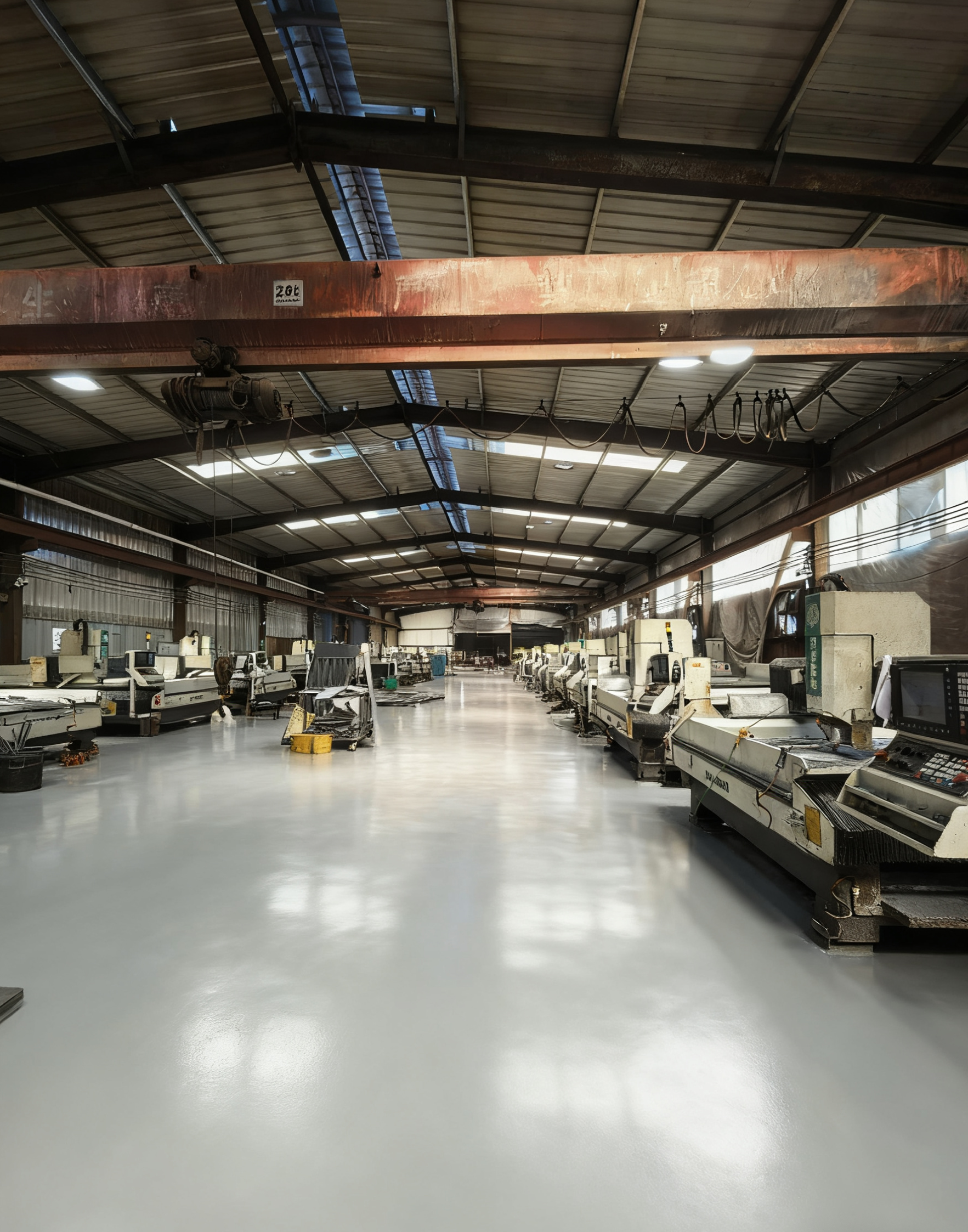
Profile processing on CNC machining centres is what makes a documented dimensional tolerance sheet meaningful. Image: Junsu Outdoor.
Step-by-Step: Building the File Before You Place the Order
- Fix the product definition first. Compliance starts with a configuration, not a category. For the pergola range this means the model — 147, 163, 175 or 220 — and the mounting type: wall-mounted, free-standing, multi-zone, or special cuts and angles. For gates it means sliding, cantilever sliding, swing or bi-fold. For fencing it means modular spliced or welded fence panels. Documents requested before this step cannot be matched to anything.
- Request records by product and batch, not by brand. Ask for the record that covers the exact model and the exact production batch. A general company certificate is a starting point, not an answer.
- Match the load record to the site. Take the local snow load and wind exposure, then check that the tested span, mounting type and fixing detail correspond to what will be installed.
- Verify the coating as one chain. Alloy, pretreatment, coating application and adhesion testing should be requested together, because an adhesion failure is usually a chain failure rather than a single-step failure.
- Confirm the electrical and motor chain. Motor aging data, IP66 protection, drainage path, cable routing and power supply location belong in the same file as the mechanical records. Electrical components should not remain submerged in standing water, and power supply position, drainage and cable routing should be confirmed before installation.
- Agree the inspection protocol before production. Pre-production drawings should be prepared and confirmed against project dimensions and requirements, then in-process inspection and 100% pre-shipment testing should follow that approved reference.
- Archive and repeat. Keep the per-order file, and on repeat orders re-verify the same eight records rather than assuming continuity.
Regional Fit: Which Evidence Matters Most in Each Delivered Market
The same document set is adapted to a different load case in each market. Junsu Outdoor project records cover deliveries to ten countries — Australia, Belgium, Canada, Switzerland, France, the United Kingdom, Italy, Maldives, Singapore and the United States — and application references extend to Spain and the Philippines. The stated reference service duration for outdoor applications is 15 years, and the case file records improved site safety and privacy plus reduced later maintenance cost across those deliveries. The regional notes below show which record a buyer in each market should put at the top of the file.
United States
US projects usually combine two questions: structural load and import paperwork. Ask for the wind resistance test configuration for the delivered span, the snow load confirmation for northern states, and the 100% pre-shipment record. On the commercial side, aluminum fence panel kits of Chinese origin are classified under HTSUS 7610.90.0080 with a 5.7% duty rate, per a published U.S. Customs and Border Protection ruling — a figure that belongs in the landed-cost model before the order, not after it. With North America representing 34.2% of global aluminum pergola demand, documentation that moves cleanly through an importer's process has value beyond a single project.
Belgium
Belgian coastal and lowland sites combine wind-driven rain with limited natural drainage. Prioritise the waterproof performance test and the drainage path drawing, then the coating adhesion record for cut edges exposed to persistent moisture. A smart bioclimatic pergola supplied for a Belgian project is a useful reference for how the closed-louver drainage route performs in a wind-driven rain environment.
United Kingdom
UK installations face gust loading, frequent rain and long damp periods. Request the load-bearing wind resistance configuration first, then adhesion records for the finish. For garden boundary work, the aluminium louver fence and louvered pergola applications delivered for UK projects show the same requirement in a different product: privacy screening that still allows airflow, installed with stable spacing and consistent panel alignment.
Italy
Italian projects generally prioritise heat and solar exposure over snow. Surface coating adhesion, colour stability under UV and motor aging data matter most, together with ventilation around the drive system. A commercial electric gazebo delivered for an Italian project is a typical reference: high-usage commercial shading where the motor duty cycle, not the frame, defines service intervals.
Switzerland
Snow load governs Swiss structural checks. The stated snow load for the pergola range is up to 100 lbs/sq ft, with a maximum single-zone size of 22'10" x 16'; both values must be re-confirmed for the actual span, mounting type and fixing detail before installation. Motor aging data and the stated working temperature range are the second priority, because alpine temperature swings stress drives and controls. A windproof and waterproof electric gazebo supplied for a Swiss project is the relevant reference.
Singapore
Tropical humidity, monsoon rain and salt-laden air near the coast shift the priority to corrosion and ingress protection: the IP66 motor and control specification, the coating system, and the drainage route through the posts. A wall-mounted gazebo delivered for a Singapore project illustrates why the mounting detail belongs in the compliance file — the wall interface determines both load transfer and water management.
Australia
Australian sites combine high UV intensity, coastal salt exposure and strong wind. UV-related coating performance, the wind resistance record and motor reliability under remote-control operation are the three records to request first. A remote-control electric gazebo supplied for an Australian project, and a privacy and security aluminum sliding entrance delivered for an Australian site, are representative references for those conditions.
Spain
Spanish demand is dominated by dry heat, UV exposure and poolside splash, including chlorinated water contact. Surface coating adhesion and chemical splash resistance matter more than snow load here. A poolside privacy louver fence delivered for a Spanish project is a useful reference, because pool surrounds combine continuous UV, water contact and the airflow requirement that louver fencing is designed to satisfy.
Philippines
Philippine projects sit in a typhoon-exposed, high-rainfall, high-humidity environment, so the wind resistance record and the waterproof performance record are the entry conditions for both pergolas and gates. An automatic sliding fence gate delivered for a Philippine project is the relevant reference for how the gate structure, motor selection and access control are matched to site conditions — gate type, dimensions, weight and installation conditions determine the motor and control system chosen.
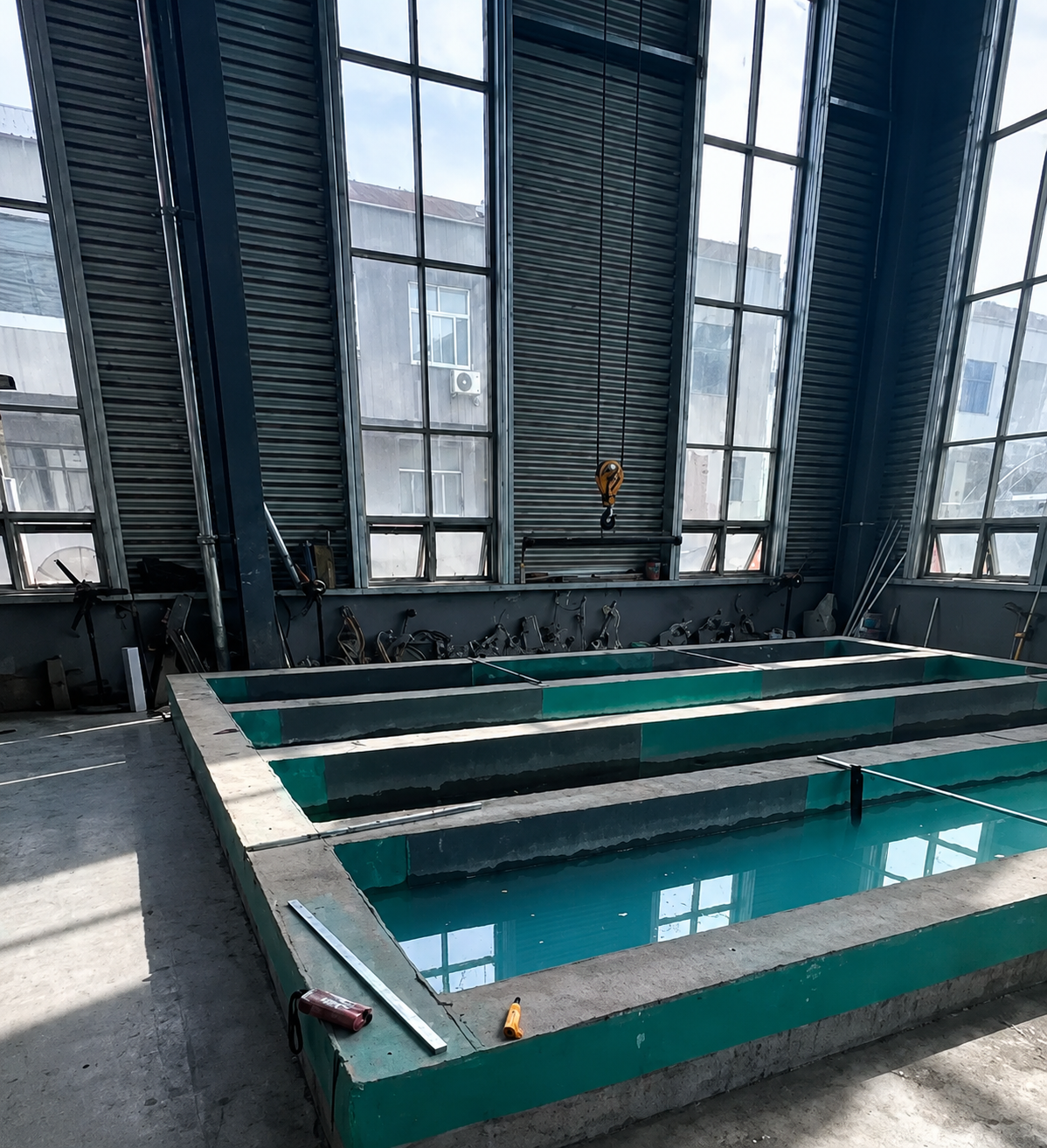
Coating adhesion is a chain result: pretreatment, coating application and adhesion testing are requested together. Image: Junsu Outdoor.
Who This Document Set Is Built For: Typical Use Cases
The same eight records serve very different buyers, and the review depth differs accordingly.
- Individual villa owners — one patio pergola or one automatic driveway gate, where the priority is the delivered configuration matching the approved drawing.
- Wholesalers and importers — repeat container orders, where the priority is per-order inspection files and consistent coating and colour between batches.
- Landscape and construction contractors — site-fitted installations, where dimensional tolerance and installation drawings decide whether the schedule holds.
- Real estate developers — multi-unit delivery, where one-stop supporting delivery and installation across a project reduces coordination load.
- Hospitality and public project clients — hotels, resorts, parks, municipal infrastructure and commercial landscape work, where a documented file is often a procurement prerequisite rather than a preference.
Products in these files span a modern aluminum pergola, bioclimatic pergola, louver pergola, retractable roof pergola, motorized pergola, waterproof pergola and 4-season aluminum pergola, together with aluminum fence panels, modern aluminum fence, automatic gates and electric gates for driveways. Where a single project uses pergola, fence and gate together, one-stop customization from a single factory with unified profiles, colour codes and craft is what prevents mismatched colours across separately purchased items — a small point that becomes a visible defect on a completed site.
Comparison Table: Records, Parameters and What Each One Proves
| Evidence record | What it verifies | What to request from the supplier |
|---|---|---|
| Raw material composition test | Alloy grade and consistency of the extrusion input | Composition record linked to the batch; alloy grade written into the order specification (6063-T5 aluminum alloy is the standard material) |
| Wall thickness measurement | Structural section capacity, independent of outer profile size | Measured wall thickness per profile code against drawing tolerance |
| Surface coating adhesion test | Bond between the coating system and the aluminum after pretreatment and forming | Adhesion record on finished profiles plus coating type (RAL colour, fluorocarbon, wood grain transfer) |
| Dimensional tolerance inspection | Fit and alignment of louvers, frames, fence panels and gate tracks | Tolerance sheet plus inspection record showing CNC profile machining data |
| Load-bearing wind resistance test | Whether the assembled unit holds its stated wind load | Test-unit configuration, tested span, mounting type and applied load value (stated up to 190 mph) |
| Waterproof performance test | Whether closed louvers and the internal drainage path shed water | Drainage path drawing plus water test record at the delivered span |
| Motor continuous operation aging test | Service life of the drive system under repeated cycles | Cycle count, motor protection rating (IP66) and working temperature range |
| 100% pre-shipment testing | That the shipped set matches the approved configuration | Per-order inspection record covering function, finish and packaging |
| Parameter | Stated value | Confirm before order |
|---|---|---|
| Standard aluminum alloy | 6063-T5 | Included in the order specification and the material record |
| Bioclimatic pergola models | 147 / 163 / 175 / 220 | Selected model and mounting type (wall-mounted, free-standing, multi-zone, special cuts and angles) |
| Single-zone size | Up to 22'10" x 16' | Site dimensions and anchoring method |
| Snow load | Up to 100 lbs/sq ft | Local snow load for the delivered span and mounting type |
| Wind load | Up to 190 mph | Local wind exposure and the fixing detail |
| Outdoor service duration (reference case) | 15 years | Maintenance plan and spare-part availability |
| Motor and control protection | IP66 waterproof and dustproof | Power supply location, cable routing and site drainage |
| Working temperature range | −35 °C to 65 °C | Local temperature extremes |
| Monthly production capacity | 3,000 sets | Order quantity against the delivery schedule |
| Lead time | 30 days | Confirmed in the purchase order |
| Minimum order quantity | 1 set | Sample and pilot-order planning |
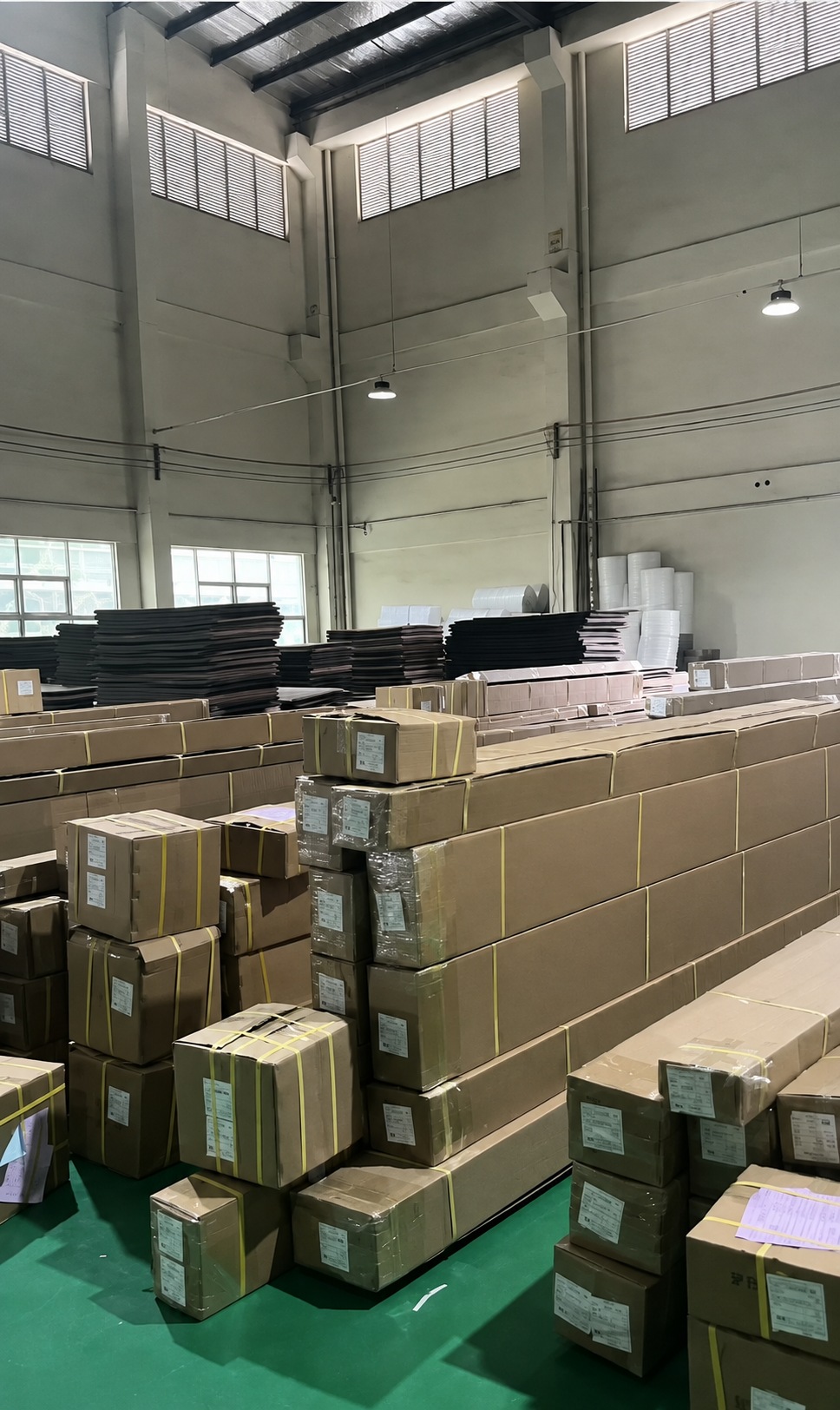
100% pre-shipment testing connects the eight evidence records to the specific order being shipped. Image: Junsu Outdoor.
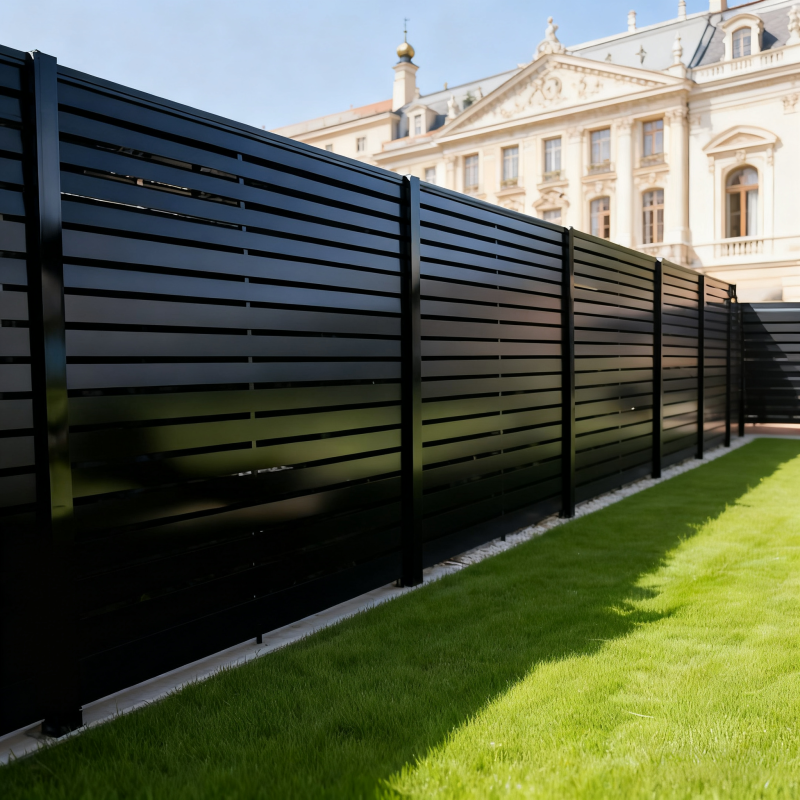
Regional fit works the same way for fencing: privacy level, spacing and coating are specified to the site. Image: Junsu Outdoor, USA application.
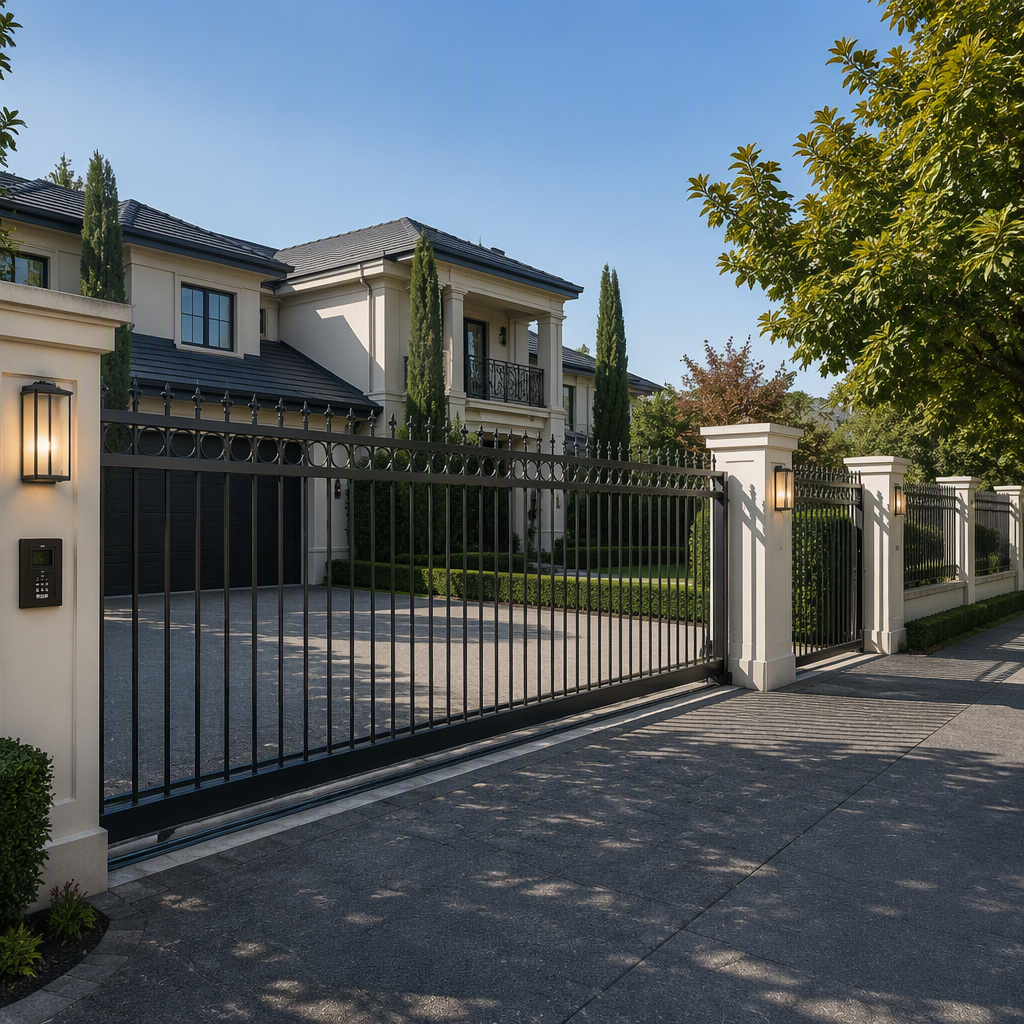
Gate type, dimensions, weight and installation conditions determine the motor and control system selected. Image: Junsu Outdoor, Philippines application.
Frequently Asked Questions
What should be inside a compliance file for an aluminum pergola, fence or driveway gate?
A complete file contains eight records: raw material composition testing, wall thickness measurement, surface coating adhesion testing, dimensional tolerance inspection, load-bearing wind resistance testing, waterproof performance testing, motor continuous operation aging testing, and 100% pre-shipment testing. Each record should identify the product model, the production batch and the test method. Factory-level documentation sits around them: quality system and product safety certification, export customs filing, and per-order inspection files that reference the approved pre-production drawings.
Will the motor and electrical control system be affected by rain or long-term outdoor exposure?
The motorized pergola system is designed for outdoor applications, and the motor, wiring and control components are specified with IP66 waterproof and dustproof protection for outdoor installation across a wide temperature range (stated −35 °C to 65 °C). Correct installation remains decisive: electrical components should not remain submerged in standing water, and power supply location, drainage conditions and cable routing should be confirmed before installation. Installation guidance, remote system debugging and after-sales fault response are part of the support scope for the selected configuration.
Do documented materials and testing change the long-term cost of an outdoor living installation?
The stated material comparison is that aluminum alloy construction with a fluorocarbon and wood grain transfer finish carries an initial cost roughly 15%–25% higher than traditional outdoor materials, while reducing maintenance workload by around 90% and lowering the comprehensive 20-year cost by 70%–80%, with the replacement cycle extended three to six times. The reference case records a 15-year outdoor service duration and reduced later maintenance cost. Those figures are most useful as an input to a total-cost comparison rather than as a purchase justification on their own, and the tested records above are what make the cost claim defensible.
Can I review drawings or a sample before full production?
Yes. Pre-production drawings can be prepared and confirmed according to project dimensions and requirements, and the minimum order quantity is 1 set, which makes pilot orders practical. For gates, the information needed for an accurate design and quotation is the clear opening width and height, the preferred gate type, quantity and site photos; for automatic gates, ground condition, posts or walls, available side space and power supply location are also helpful. Opening direction should be confirmed before final production drawings, since accurate site information allows the gate structure, opening direction and motor installation to be evaluated before production.
What is the lead time and capacity for a large outdoor living order?
Production lead time is stated at 30 days, with a monthly capacity of approximately 3,000 sets across aluminum pergola, aluminum fence and aluminum gate production. As a capacity reference, one delivered program covered 600 sets for the USA market within a single order spanning ten destination countries, including one-stop supporting delivery and installation. Buyers planning a multi-market project can request the current product catalogue, a sample configuration, or a project quotation with the load and coating records attached to the specific models being considered.
Conclusion: Prefer Evidence Over Adjectives
Choosing a supplier for aluminum outdoor living products in an evaluation stage comes down to one test: can every claim on the quotation be traced to a record that names the product, the batch and the method? A bioclimatic pergola with a stated wind load of up to 190 mph, a stated snow load of up to 100 lbs/sq ft and a reference service duration of 15 years is only as strong as the wind resistance, waterproof and motor aging records behind those numbers — and only as reliable as the 100% pre-shipment inspection that connects them to the order actually shipped. Regional fit then becomes a review exercise rather than a guess: US buyers add import classification and load confirmation, European buyers prioritise wind-driven rain and coating adhesion, Gulf-of-Asia and Pacific buyers prioritise corrosion, ingress protection and typhoon-level wind loading.
Request the Evidence Package for Your Project
Junsu Outdoor provides aluminum bioclimatic pergolas, aluminum fences and automatic driveway gates with material records, coating and load test documentation, and 100% pre-shipment inspection files for each order. Download the full product catalogue, request a sample configuration, or send your site dimensions for a project-specific quotation.
Download the Junsu Products Catalogue (PDF)
www.junsu-outdoor.com
Email: JunSu@junsutech.com
WhatsApp: +86 135-2556-8065
Manufacturer-stated parameters in this article describe the standard product range. Load, coating and electrical performance should always be re-confirmed against the specific model, span, mounting type and site conditions of each project.