
- Industry News
- 265
Outdoor Living Solutions: Garden, Modular Spliced and Welded Fence Comparison
Compare garden, modular spliced and welded aluminum fences on structural stability, anti-rust performance, finish uniformity and 15-year maintenance expectations for coordinated outdoor living projects.
Outdoor Living Solutions: Garden, Modular Spliced and Welded Fence Comparison
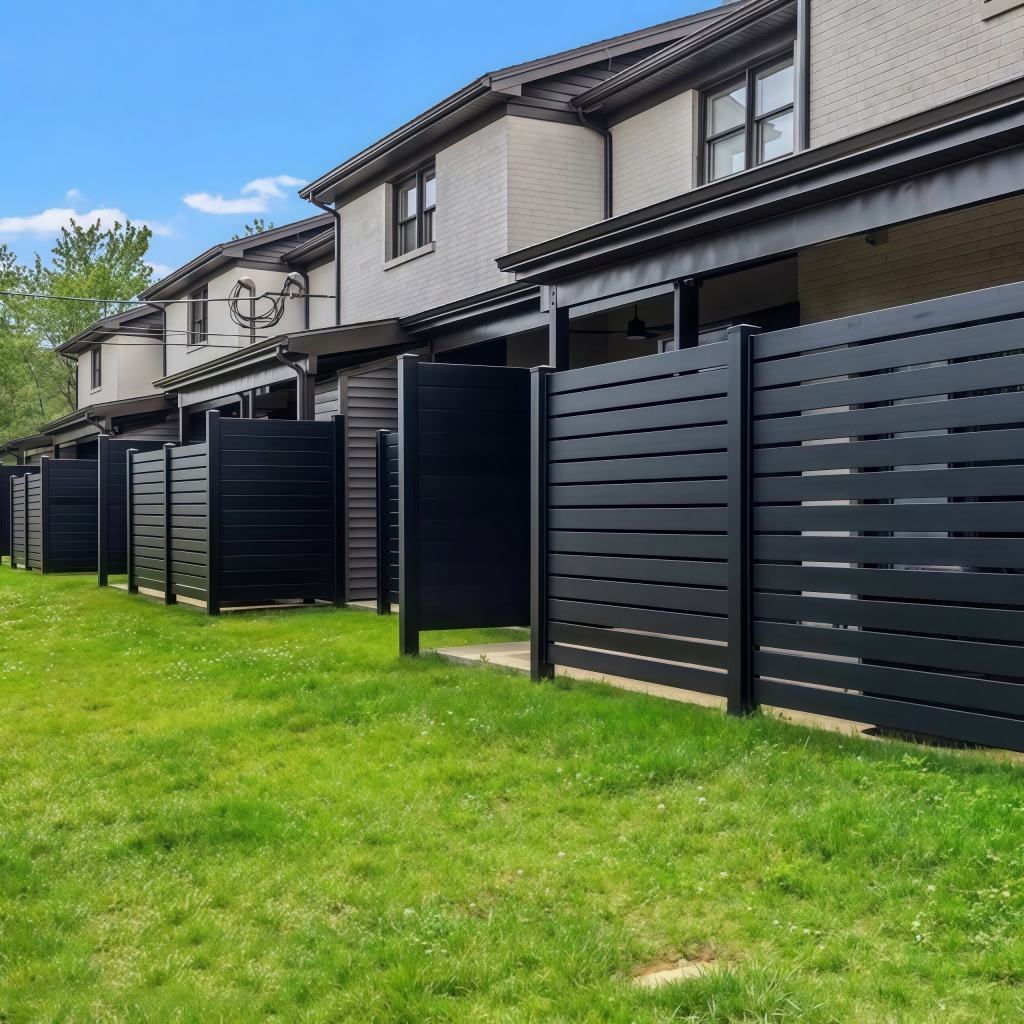
Aluminum outdoor living projects normally choose between three fence constructions: garden fences, modular spliced fences and welded fences. All three are built from aluminium and all three can be supplied in a matching colour, yet they are assembled differently, finished differently and repaired differently. Garden fences prioritise decorative detailing and lighter garden boundaries; modular spliced fences prioritise factory-panel consistency and on-site flexibility; welded fences prioritise a continuous, joint-free frame for the stiffest panel. The four criteria that decide whether a buyer is still satisfied three years later — structural stability, anti-rust and weather resistance, surface finish uniformity, and maintenance effort — are compared below, using a documented 15-year outdoor service case and one-stop delivery experience across villa courtyards, residential communities, parks and municipal sites.
Why the Fence Decision Is Usually Made Too Late
The fence is usually the largest visible surface in a finished courtyard, and it is usually the last item specified. Buyers commonly lock in the pergola and the driveway gate first, then treat the fence as a fill-in purchase. That sequence is the root cause of most outdoor living mismatches: a pergola, a fence and a gate that share a colour name but not a colour code; hardware that looks inconsistent from three metres away; and panels that age at different rates because they were coated in different batches at different factories.
Fence selection therefore needs to be treated as a specification decision rather than a purchasing formality. Four questions decide the outcome:
- Structural stability — can the panel hold its line across the span required, without joints working loose over time?
- Anti-rust and weather resistance — will the material and coating survive humidity, salt spray, temperature swings and UV without corrosion or visible fading?
- Surface finish uniformity — will panels bought in the same order look identical in colour, gloss and texture?
- Maintenance expectations — what ongoing work does the owner or facility team accept over the life of the project?
Those four questions map directly onto the three fence families. The rest of this guide answers them one at a time.
Where Aluminum Fences Sit in the Outdoor Living Market
Aluminium is now the default structural material for premium residential and municipal outdoor living packages, and the market data reflects that shift. The global aluminum pergola market was valued at USD 3.8 billion in 2025 and is projected to reach USD 7.1 billion by 2034 (Dataintelo, Aluminum Pergola Market Research Report 2034). Within that demand, North America held a 34.2% share in 2025, while the narrower bioclimatic pergola segment is forecast to grow from USD 600.87 million in 2026 to USD 1,049.46 million by 2034 at a CAGR of 7.22% (Fortune Business Insights).
Buyers should read those figures with one caveat. Market definitions are not yet standardised: Coherent Market Insights estimates the total pergola market at USD 4.74 billion for 2026, which overlaps heavily with the aluminium-only figure above. The discrepancy is a material-segmentation difference rather than a data error. The practical takeaway for a specifier is simpler: demand is large and growing, suppliers are numerous, and differentiation has moved from price alone to finish quality, compliance documentation and delivery reliability.
Two standards and one tariff line illustrate how formal the category has become:
- ASTM F2957 is the specific standard for Ornamental Aluminum Fence Systems in the United States, covering structural testing and surface finish.
- EN 13561:2015 is the European standard for performance and safety requirements of external blinds and awnings, including pergola awnings — relevant when a fence, pergola and gate are bought as one outdoor living package.
- HTSUS 7610.90.0080 is the US classification for aluminum fence panel kits imported from China, carrying a duty rate of 5.7% (U.S. Customs and Border Protection ruling NY N169385).
For adjacent items, automatic sliding gates accounted for a 30.2% share of the automatic gate opening system market in 2025, which is why gate type and fence type are frequently specified together.
The Three Fence Types Defined
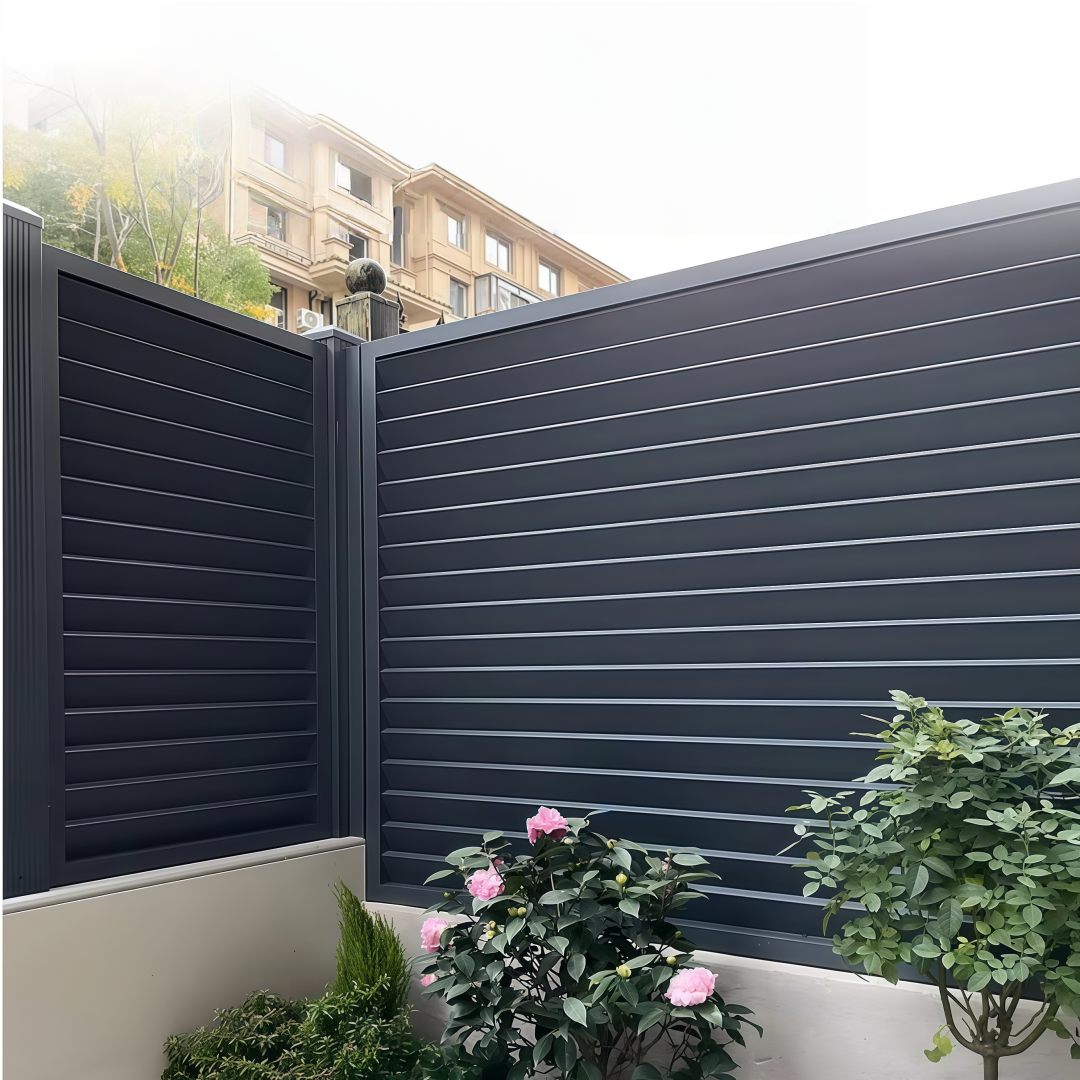
Garden Fence
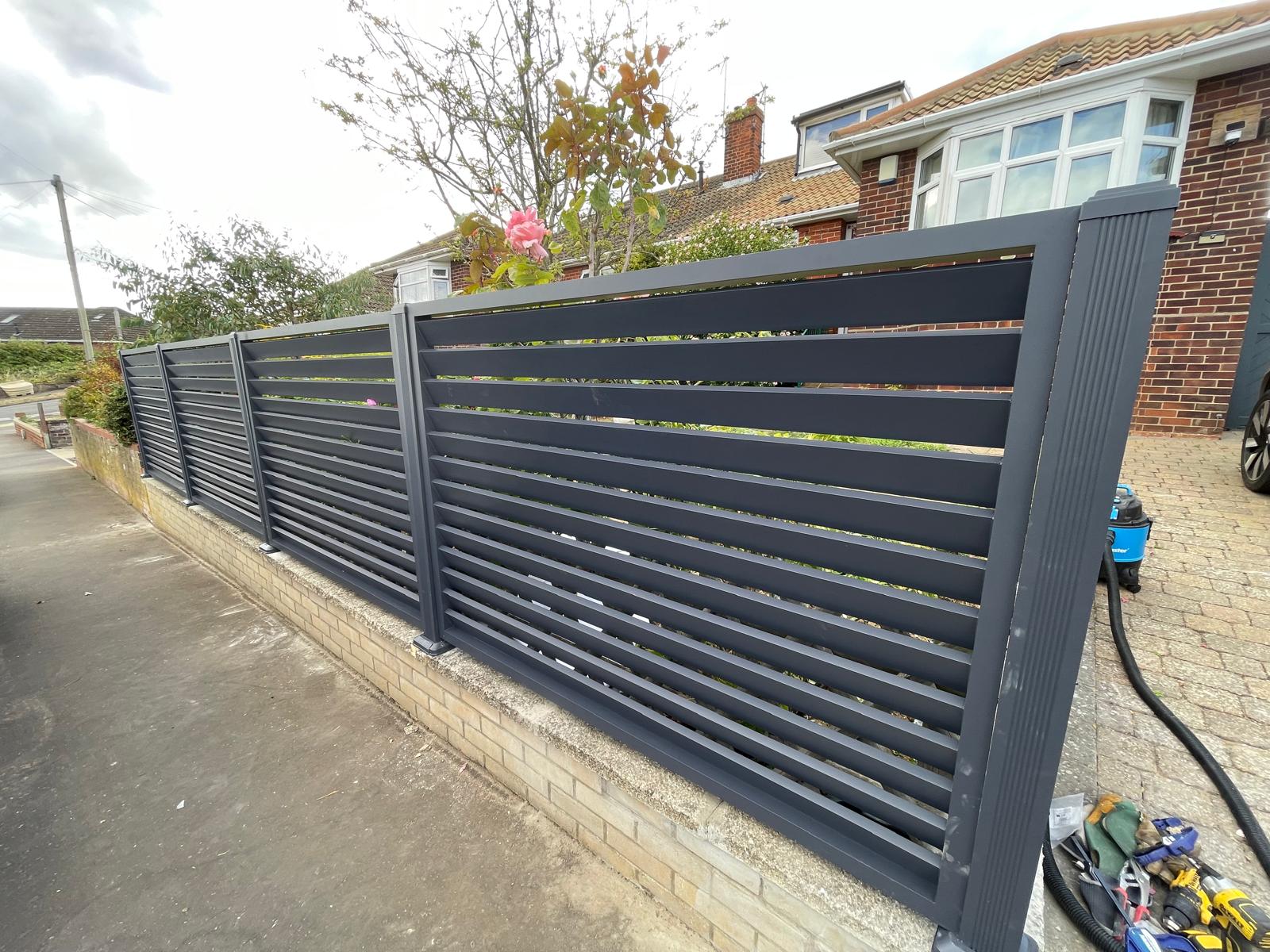
A garden fence is an aluminium decorative fence used for garden boundaries, courtyard edges and lighter screening duties. At Junsu Outdoor the garden fence and aluminum fence range is customisable in overall dimensions, alloy profile thickness, RAL surface colour, hollow carving pattern, fence bar spacing, gate opening type, intelligent access system, lock and hardware style, engraved logo, anti-collision structure, bottom gap height and hidden installation fittings. Its primary job is visual: it defines a boundary, carries a decorative pattern and separates spaces without needing to act as a primary load-bearing structure. Louvered variants of the same family use angled slats to reduce direct visibility while maintaining airflow, which makes them suitable for patios, courtyards, HVAC equipment screens and commercial mechanical enclosures where ventilation is required.
Modular Spliced Fence
A modular spliced fence is built from factory-produced panels that are joined on site. The defining engineering feature is a seamless splicing structure with hidden installation fittings, which keeps the joints visually quiet while allowing long runs to be assembled from manageable, transportable sections. Because the panels are discrete, a modular spliced fence is the most practical option where site access is restricted, where a boundary is installed in phases, or where individual sections may later need replacement without rebuilding the whole run.
Welded Fence
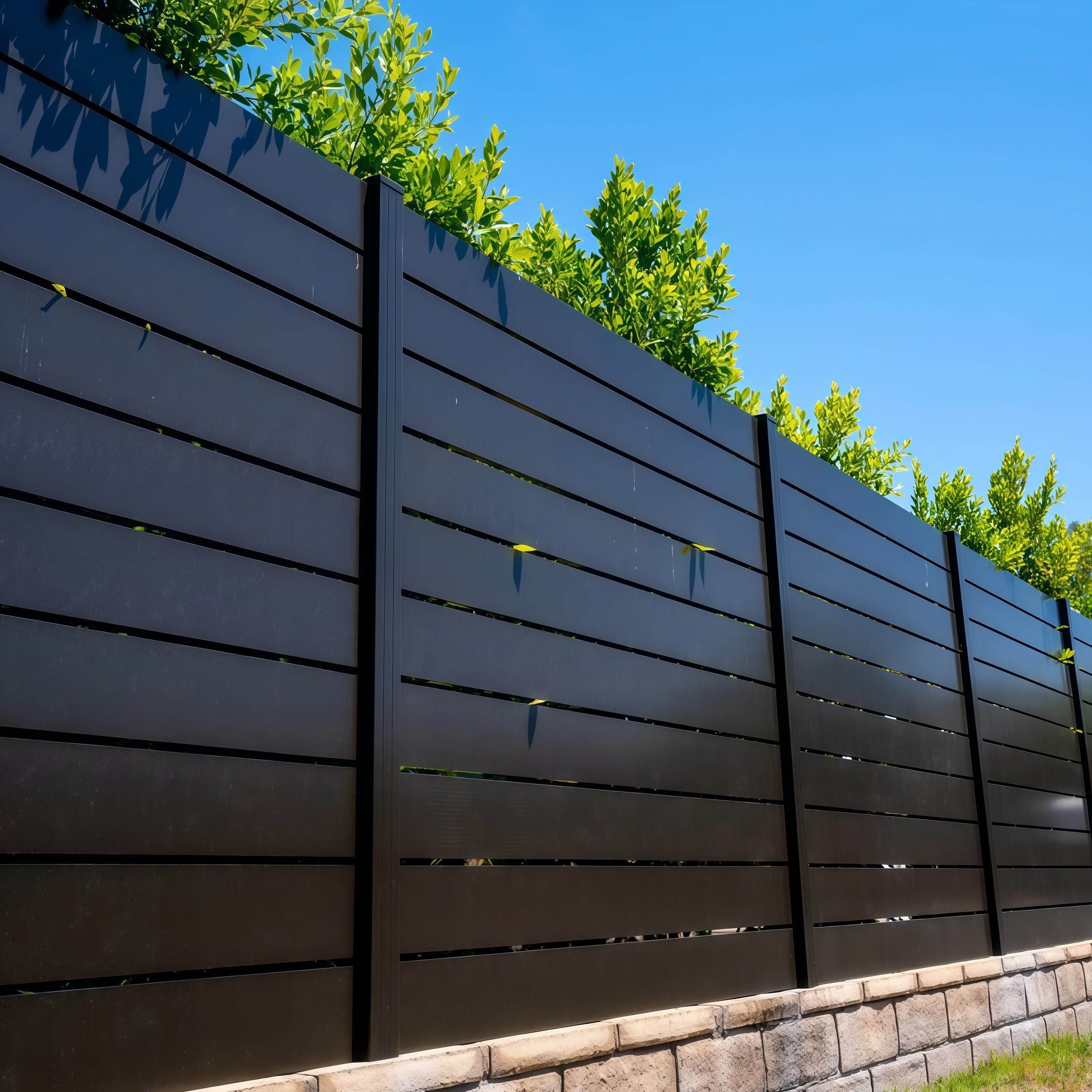
A welded fence is assembled by welding rather than by mechanical joining, and the welding quality becomes a visible and structural property of the finished product. Junsu Outdoor lists exquisite welding technology, high structural stability and uniform surface finish among the stated highlights of its aluminium outdoor product range. Practically, a welded frame behaves as one continuous body: the joints that could work loose on an assembled panel do not exist, which is why welded construction is generally evaluated first for longer spans, premium frontages and high-visibility boundaries.
Material baseline. All three fence families share the same starting point at Junsu Outdoor: 6063-T5 aluminum alloy is the standard material for aluminium products across the fence, gate and pergola range. Differences between the three types therefore come from construction method, finishing control and installation logic — not from a different base metal.
Criterion 1: Structural Stability
Structural stability is a function of how the panel resists movement at its joints, not simply of how thick the aluminium is. A garden fence delivers adequate rigidity for decorative boundaries and shorter panel runs, where the panel is supported by posts at close intervals and does not carry a heavy structural role. A modular spliced fence derives its rigidity from the frame profile plus the splicing connection; the engineered seam is the component that must be controlled, which is why seamless splicing structure and hidden installation fittings are specified as production requirements rather than optional features. A welded fence removes the joint entirely, so a welded frame generally behaves as a single continuous body with no mechanical connection to loosen.
Two production controls determine whether any of the three types performs as designed:
- Wall thickness measurement, which confirms the profile gauge actually delivered matches the specified profile gauge. Under-gauge material is the most common hidden cause of a fence that flexes.
- Load-bearing wind resistance testing, which evaluates the assembled system rather than the bare profile.
For exposed sites — open coastal ground, elevated plots, long unbroken boundary runs — the specification question should be asked explicitly: which fence family, at which profile thickness, over which post spacing? Junsu Outdoor supports customisation based on CAD drawings, architectural plans, sketches, photos, dimensions and samples, and can issue technical drawings, design optimisation and installation drawings so that span and fixing logic are confirmed before production begins.
Criterion 2: Anti-Rust and Weather Resistance
None of the three fence types rusts, because all are aluminium rather than ferrous. Aluminium alloy construction is corrosion-free, which is the single largest difference between an aluminium fence and wrought iron, solid wood or brick boundary systems. What then separates the three types is the coating system and the environment it is installed in, not the base metal.
Junsu Outdoor specifies outdoor installation conditions for its aluminium range, including resistance to high humidity, dust and a wide operating temperature range of −35 °C to 65 °C, together with anti-corrosion aluminium alloy and an anti-rust, fade-resistant surface coating. Project-level special requirements extend to a wider temperature resistance band of −50 °C to 100 °C, silent operation for motorised components, wind load resistance, intelligent linkage functions and a seamless splicing structure.
For the finish itself, the supplier specifies premium fluorocarbon and wood-grain transfer finishes described as UV-, salt-spray- and rain-resistant, with colour stability stated at 20 years. That figure is a manufacturer specification rather than an independent test result, and buyers specifying coastal or high-UV projects should treat it as a design target to be verified against the coating system actually quoted. Classification for perimeter waterproofing of the wider system is stated as IP66 waterproof and dustproof, alongside a wind load capacity up to 190 mph and a snow load capacity up to 100 lbs/sq ft for the louvered roof system.
Criterion 3: Surface Finish Uniformity
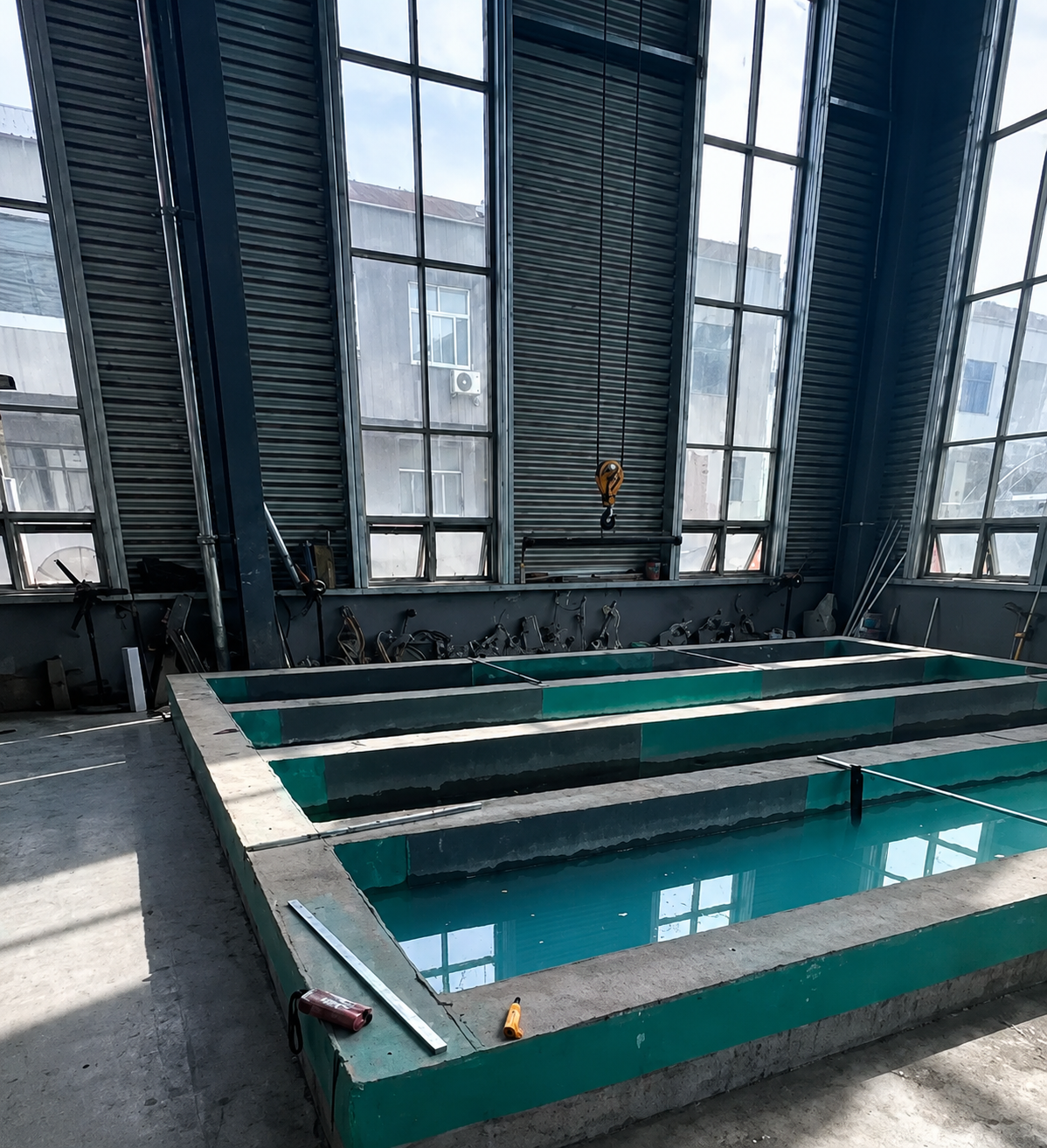
Finish uniformity is where fence types visibly diverge on a finished site, because colour difference is far more obvious on a 40-metre fence line than on a single pergola. Three variables control it:
- Pre-treatment quality. Surface preparation before coating determines adhesion and therefore how evenly the final colour reads. Junsu Outdoor operates a pickling stage as part of the aluminium finishing process, and lists surface coating adhesion testing among its inspection methods.
- Batch control. Panels produced and coated in the same production window in the same facility will match. A modular spliced fence produced as one order from one factory gives the buyer this control; mixing suppliers across a fence, gate and pergola package does not.
- Finishing at the joint. On a welded fence, weld zones must be dressed and coated so that the seam does not read differently from the surrounding panel. This is a labour and skill variable rather than a material variable, which is why welding quality and uniform surface finish are listed together as product highlights by the manufacturer.
The practical buying instruction is to specify a single supplier for the perimeter. Junsu Outdoor describes its one-stop model as single-factory customisation with unified profiles, colour codes and craft — the mechanism that prevents a fence, pergola and gate ordered separately from arriving in three slightly different colour versions.
Criterion 4: Maintenance Expectations Over a 15-Year Horizon
Maintenance is the criterion buyers underestimate most, and it is measured over years rather than at handover. Documented outdoor aluminium projects supplied by Junsu Outdoor have run for 15 years, with reported results covering stable and durable long-term use and reduced later maintenance cost. Across that horizon, the three fence types differ mainly in repair behaviour rather than in routine upkeep:
- Garden fence: routine upkeep consists of regular light cleaning. Because panels are discrete units, a damaged decorative panel can be replaced individually.
- Modular spliced fence: the same light-cleaning routine applies, and the modular logic makes section-level replacement the easiest of the three. This matters for community and municipal boundaries, where isolated impact damage from vehicles, equipment or landscaping work is common.
- Welded fence: routine cleaning is comparable, but repair of a damaged area generally means reworking or replacing the welded assembly rather than swapping a single panel. For a premium frontage with low damage exposure, this trade-off is normally accepted in exchange for the joint-free appearance.
On material comparison, the manufacturer's own documented position is that aluminium alloy is rust-free and maintenance-free, requiring only regular light cleaning, against traditional wrought iron, solid wood or brick wall systems that need annual upkeep. The same source states that aluminium carries a 15–25% higher initial purchase cost but zero annual anti-corrosion renewal cost, with a replacement cycle extended 3–6 times and an overall comprehensive cost 70–80% lower within 20 years, plus a 90% reduction in maintenance workload. Those are manufacturer-stated comparison figures rather than third-party research, so buyers should re-run them against local labour rates and local material prices before quoting them internally — but the structural logic behind them, that aluminium removes rust treatment and repainting from the maintenance calendar entirely, is straightforward and verifiable on site.
Side-by-Side Comparison Table
| Criterion | Garden Fence | Modular Spliced Fence | Welded Fence |
|---|---|---|---|
| Base material | 6063-T5 aluminum alloy | 6063-T5 aluminum alloy | 6063-T5 aluminum alloy |
| Construction logic | Decorative panel and post assembly with patterned infill | Factory panels joined on site using a seamless splicing structure and hidden installation fittings | Frame welded into a continuous assembly |
| Structural stability | Adequate for decorative garden boundaries and shorter panel runs | Rigidity governed by frame profile and the controlled splicing connection | No mechanical joint to loosen; generally the stiffest option across longer spans |
| Anti-rust performance | Corrosion-free aluminium; no rust treatment required | Corrosion-free aluminium; no rust treatment required | Corrosion-free aluminium; no rust treatment required |
| Weather resistance | Outdoor installation; high humidity and dust resistant; −35 °C to 65 °C working range | Same outdoor rating, plus seamless splicing and hidden fittings that limit water traps | Same outdoor rating; weld zones require correct dressing and coating |
| Surface finish uniformity | Controlled by pre-treatment and coating batch | Panel-level batch control makes colour matching across long runs easiest | Depends on finishing quality at the weld zone as well as the coating batch |
| Repair and replacement | Individual panel replacement | Section-level replacement without rebuilding the full run | Rework or replacement of the welded assembly |
| Routine maintenance | Regular light cleaning | Regular light cleaning | Regular light cleaning |
| Typical best fit | Garden boundaries, courtyard decoration, equipment screening, patios | Large or phased projects, restricted site access, community and municipal boundaries | Premium frontages, longer spans, high-visibility boundaries |
| Customisation available | Dimensions, profile thickness, RAL colour, hollow carving pattern, bar spacing, engraved logo, bottom gap height | Same range, plus gate opening type, intelligent access system and lock and hardware style | Same range; welded configuration supports anti-collision structure and hidden installation fittings |
How to Specify and Order: Step-by-Step
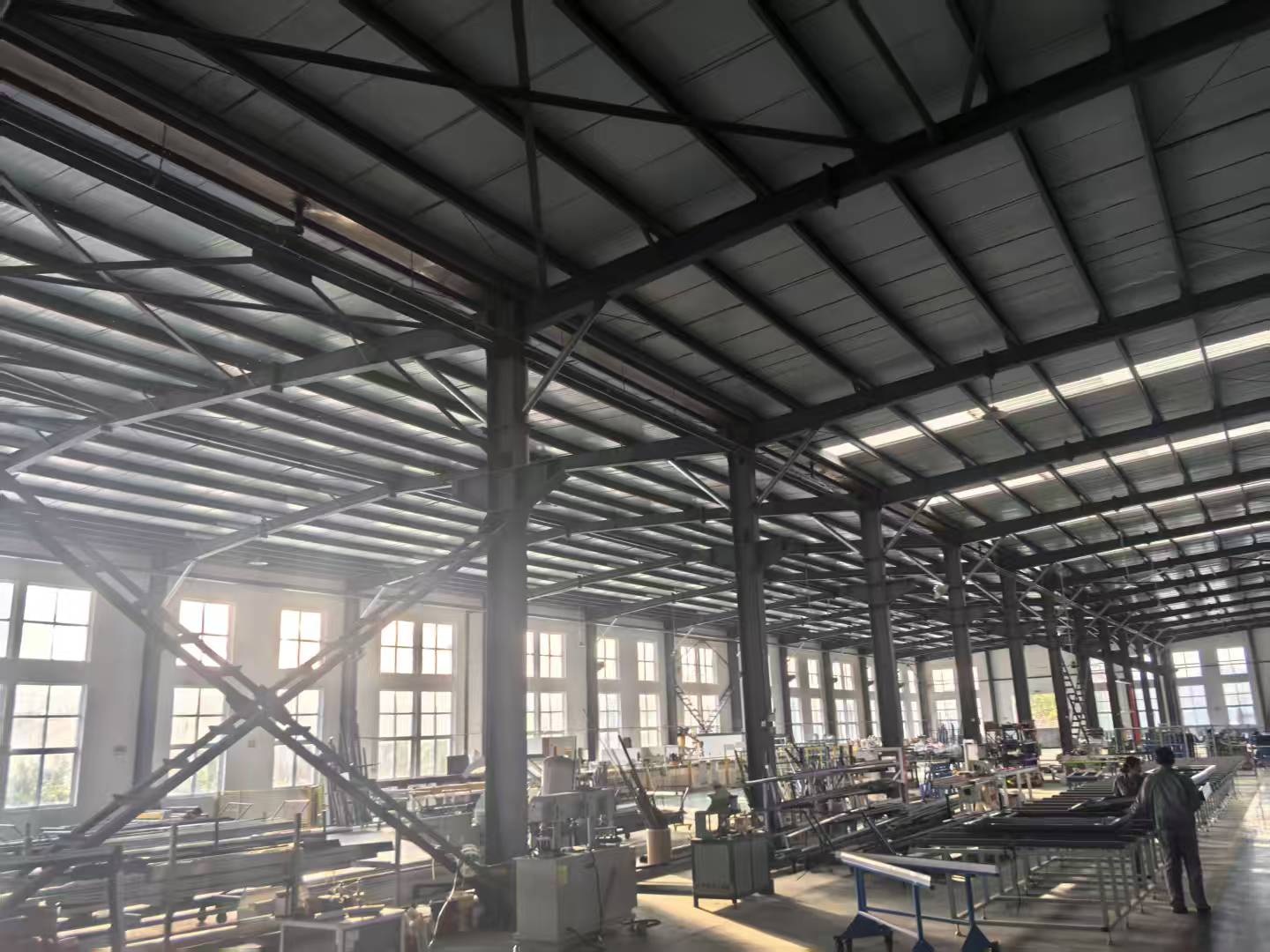
The sequence below reflects how Junsu Outdoor structures a custom fence order, from first drawings to shipment. It applies to all three fence types.
- Define the perimeter together with the rest of the package. Confirm the pergola, gate and fence as one scope so profiles, colour codes and craft are unified from the start.
- Provide site information. For fences and gates this means clear opening width and height, quantity, site photos, and for motorised gates the ground condition, posts or walls, available side space and power supply location. For the wider system, power supply position, drainage, cable routing and installation surface should also be confirmed.
- Choose the fence family per boundary segment. Different segments of the same project may justify different types — for example a welded fence along the street frontage and a modular spliced fence along the rear and side boundaries.
- Lock the specification. Agree overall dimensions, alloy profile thickness, RAL surface colour, hollow carving pattern, fence bar spacing, bottom gap height, anti-collision structure, engraved logo and hidden installation fittings, plus gate opening type, intelligent access system and lock and hardware style where relevant.
- Approve drawings. Technical drawings, design optimisation and installation drawings are prepared from CAD files, architectural plans, sketches, photos, dimensions or samples, and confirmed before production.
- Validate with a sample or single set where required. The minimum order quantity is 1 set, so a sample or pilot unit can be produced and reviewed before a project-scale release.
- Produce under staged inspection. Inspection methods include raw material composition testing, wall thickness measurement, surface coating adhesion testing, load-bearing wind resistance testing, waterproof performance testing, motor continuous operation aging testing and dimensional tolerance checks, with 100% inspection before delivery.
- Pack, ship and install with support. Packaging inspection is part of the pre-shipment routine; installation guidance, remote system debugging and spare parts support follow delivery.
Production parameters for planning purposes: monthly capacity of approximately 3,000 sets and a lead time of about 30 days, from a 30,000 m² manufacturing base with a 120-person team and an annual output of roughly 36,000 sets.
Where Each Fence Type Fits: Project Use Cases
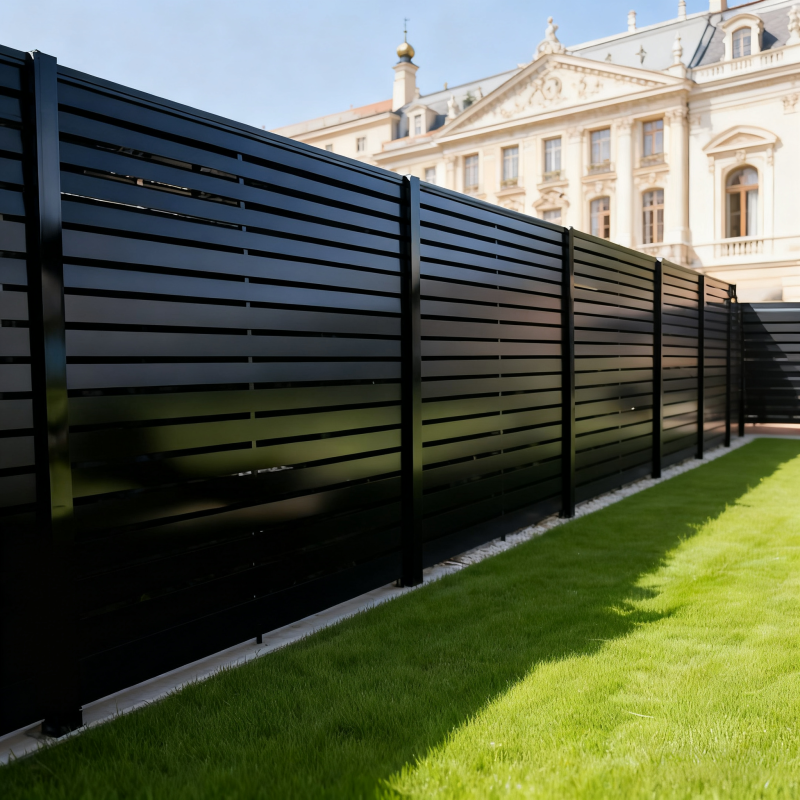
Documented aluminium outdoor projects supplied by Junsu Outdoor have covered villa courtyard decoration and protection, residential community supporting facilities, park and scenic landscape engineering, hotel and resort outdoor matching, municipal public infrastructure, factory and campus safety isolation, commercial landscape renovation, and outdoor leisure shading and enclosure. Reported outcomes include improved site safety and privacy, personalised customised presentation, stable long-term use, reduced later maintenance cost, improved overall project grade, and adaptation to different regional climates with one-stop supporting delivery and installation.
- Villa courtyards: welded fences are generally specified for the visible street frontage, with a garden fence or louvered fence used internally to define garden zones and screen equipment while keeping airflow.
- Residential communities: modular spliced fences suit long perimeters installed in phases and repaired section by section; a 600-set project in the USA is part of the documented reference base, alongside projects in Australia, Belgium, Canada, Switzerland, France, the United Kingdom, Italy, Maldives, Singapore and the United States.
- Parks and scenic landscape engineering: decorative garden fence patterns carry the design language, while the structural run is handled by welded or spliced construction.
- Municipal public infrastructure: uniformity across very long boundaries and documented inspection records matter more than decorative detailing.
- Hotels, resorts and commercial renovation: the fence must match the pergola and entrance gate, which is where single-source ordering with unified colour codes pays for itself.
Frequently Asked Questions
1. Are Junsu Outdoor's aluminium fences and pergolas CE-compliant, and which fence standards should an importer check?
Junsu Outdoor holds CE certification and ISO 9001 quality system certification, with full export customs filing qualifications, and supports its quality claims through authorised third-party testing institutions that sample raw materials and finished goods before shipment. For the fence range specifically, the published standards a buyer should reference are ASTM F2957 for ornamental aluminum fence systems in the United States, which covers structural testing and surface finish, and EN 13561:2015 for external blinds and awnings in the European Union, which is relevant when a fence and pergola awning are purchased as one outdoor living package. On the waterproof side of the system, the louvered roof provides full rain protection when the louvers are closed, with all-weather wind and waterproof performance, classification stated as IP66 waterproof and dustproof, wind load capacity up to 190 mph and snow load capacity up to 100 lbs/sq ft. For US-bound shipments, aluminium fence panel kits from China fall under HTSUS 7610.90.0080 at a 5.7% duty rate, so that line item should be built into landed-cost calculations early.
2. Can one supplier deliver the fence, the gate and the pergola as one coordinated order?
Yes — and for coordinated outdoor living projects this is the mechanism that prevents colour mismatch. Junsu Outdoor operates one-stop customisation from a single factory with unified profiles, colour codes and craft, so the fence, entrance gate and pergola are produced from the same aluminium specification and the same finishing discipline. Henan Junsu Technology Co., Ltd. has operated since 2001 and now runs a 30,000 m² manufacturing base with a 120-person team, 10 engineers, an annual output of approximately 36,000 sets, monthly capacity of around 3,000 sets, and an export ratio of 90% across the EU, USA, France, Germany, Canada and Australia. Capability covers metal processing, cutting, welding, assembly, quality inspection and packaging in-house, with OEM and ODM customisation as standard. The aluminium system is made of aluminium alloy with 6063-T5 as the standard material.
3. What drives the price difference between garden fences, modular spliced fences and welded fences?
Because quotations are project-specific, the useful comparison is cost drivers rather than list prices. The main variables are alloy profile thickness, which fence family is used and therefore how much welding labour is involved, the surface coating system selected (RAL surface colour, fluorocarbon finish or wood-grain transfer), the degree of customisation such as hollow carving pattern, engraved logo, anti-collision structure, bottom gap height and hidden installation fittings, whether an intelligent access system and gate opening type are integrated, order quantity, and freight plus duty. On total cost of ownership, the manufacturer's documented comparison states that aluminium carries a 15–25% higher initial purchase cost than traditional wrought iron, solid wood or brick, but zero annual anti-corrosion renewal cost, a replacement cycle extended 3–6 times, and an overall comprehensive cost 70–80% lower within 20 years, with maintenance workload reduced by 90%. Those figures are the supplier's own comparison and should be re-validated against local labour rates before being used in a project budget.
4. Can we validate a fence design with a sample before releasing a full project order?
Yes. The minimum order quantity is 1 set, so a sample or single pilot unit can be produced and reviewed before a project-scale release. Junsu Outdoor supports customisation based on CAD drawings, architectural plans, sketches, photos, dimensions and samples, and can supply technical drawings, design optimisation, installation drawings, customised logos, private labels and packaging. For an efficient first round, prepare the clear opening width and height, preferred fence and gate type, quantity, site photos, and — for motorised elements — ground condition, post or wall details, available side space and power supply location.
5. What is the lead time, and how is quality checked before shipment?
Lead time is approximately 30 days from a monthly capacity of about 3,000 sets. Before delivery, quality control runs through the full process: raw material composition testing, wall thickness measurement, surface coating adhesion testing, load-bearing wind resistance testing, waterproof performance testing, motor continuous operation aging testing and dimensional tolerance checks, with 100% inspection before delivery and packaging inspection included. After delivery, support covers long-term warranty service, free technical consultation, remote installation guidance, remote system debugging, spare parts supply, fault response service, product maintenance guidance and lifelong technical support.
Next Step: From Comparison to Specification
Choosing between garden, modular spliced and welded fences is not about finding one winner. The reliable project pattern is a welded or modular spliced fence carrying the structural perimeter, and a garden or louvered fence handling decorative and ventilation-dependent segments — all specified in one colour code from one factory, so the fence reads as part of the same outdoor living system as the pergola and the entrance gate.
Planning a coordinated outdoor living project? Send your perimeter dimensions, preferred fence type and site photos for a project-specific fence, gate and pergola proposal.
Download the full product catalog: Junsu Products Catalog (PDF)
Email: JunSu@junsutech.com | Tel / WhatsApp: +86 135-2556-8065 | Website: www.junsu-outdoor.com
Henan Junsu Technology Co., Ltd. — Room 1355, 38th Floor, Building 2, No.70 Dianchang Road, High-tech Industrial Development Zone, Zhengzhou City, Henan Province