
- Industry News
- 824
Why Aluminum? The Material Logic Behind Outdoor Pergolas, Fences and Gates
Why aluminum is the base material for outdoor pergolas, fences and gates: rust-free structure, uniform RAL finish, low maintenance and a 15-year service life.
Why Aluminum? The Material Logic Behind Outdoor Pergolas, Fences and Gates
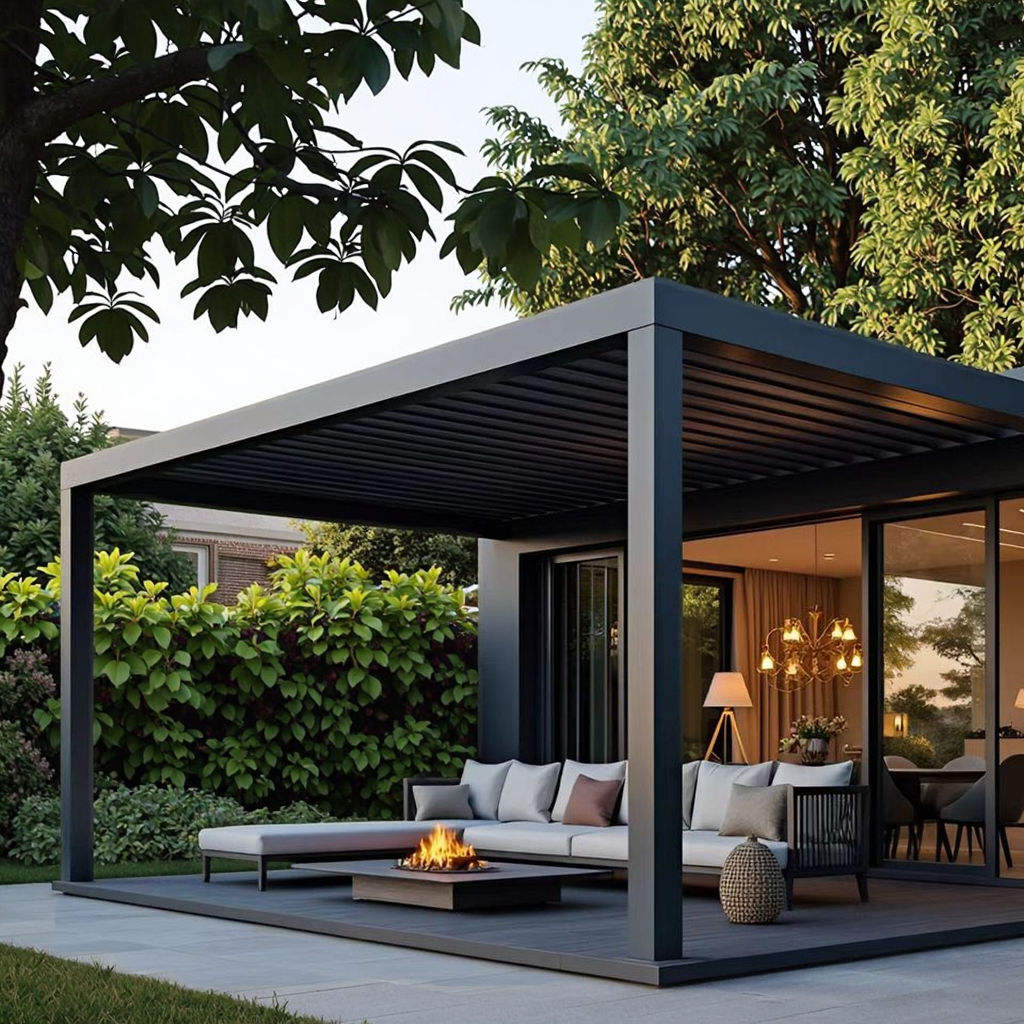
Aluminum alloy is the base material behind most modern outdoor pergolas, garden fences and driveway gates because it does four things at once: it does not rust, it holds its shape under snow and wind load, it accepts a factory-applied finish that stays uniform across every component, and it needs only light cleaning to remain presentable across a long outdoor service life. Everything buyers usually argue about — overall dimensions, RAL colour, profile thickness, louver spacing, gate automation — is a configuration layer applied on top of that material decision.
The sequence matters in the outdoor living solutions category, where a pergola, a fence line and an entrance gate are frequently bought together for a single courtyard and judged together from the street. Junsu outdoor (Henan Junsu Technology Co., Ltd.) is a Zhengzhou-based manufacturer of aluminum outdoor courtyard products, operating since 2001, providing OEM and ODM production for aluminum pergola, aluminum fence and aluminum gate products, and exporting to markets including the USA, Italy, France, Canada, the UK, Australia and Germany.
Problem Definition: Buyers Compare Products, but Time Compares Materials
Almost every first purchase in this category starts as a product question — which pergola style, which fence panel, which gate type. The more useful question is a material question, because the attributes buyers actually care about are decided by the substrate long before a catalogue page is designed: whether the frame stays straight, whether the finish still matches after several seasons, and how often somebody has to climb up and re-coat or re-tighten something.
Four failure patterns account for most replacement decisions on outdoor structures:
- Corrosion at fixings, joints and cut edges. Ferrous components and untreated steel sections are the usual weak points, and the risk rises sharply on sites near salt water or in persistently humid air.
- Coating breakdown and colour drift. A fence installed in year one and a pergola added in year four can end up visibly different shades if they do not share one profile source and one colour code.
- Movement under wind and snow load. Loose connections show up as rattle, misaligned louvers, or a gate leaf that no longer meets its catch cleanly.
- Maintenance load. The annual cycle of sanding, treating, repainting or replacing sections is a cost that never appears on a quotation but does appear in a budget.
There is a second, quieter problem: material and configuration get compared at the same time. A quotation for a thin-walled aluminum gate frame and a quotation for a heavy timber gate look like two prices for one product, when in reality they are two different answers to two different questions. Separating the two — material first, configuration second — is the single most useful discipline a first-time buyer can adopt, and it is why the reference project behind this article is specified around a 15-year outdoor service life rather than a one-season appearance target.
Industry Background: How Aluminum Became the Default Substrate
Aluminum is not a niche choice in this category any more; it is the substrate the category has consolidated around. Dataintelo's aluminum pergola research values the global aluminum pergola market at USD 3.8 billion in 2025 and projects USD 7.1 billion by 2034, with North America holding a 34.2% share of demand in 2025. Fortune Business Insights tracks the narrower bioclimatic segment growing from USD 600.87 million in 2026 to USD 1,049.46 million by 2034, a compound annual growth rate of 7.22%.
The same shift is visible on the access side. Automatic sliding gates held a 30.2% share of the automatic gate opening system market in 2025 — a meaningful signal, because a motorised gate only makes commercial sense on a leaf that is light, dimensionally stable and corrosion-resistant enough to keep cycling for years.
Regulation has followed the material. In Europe, EN 13561:2015 sets the performance and safety requirements for external blinds and awnings, including pergola awnings. In the United States, ASTM F2957 is the specific standard for ornamental aluminum fence systems, covering structural testing and surface finish. Trade treatment is equally specific: aluminum fence panel kits from China enter the USA under HTSUS 7610.90.0080 at a 5.7% duty rate, which is one reason landed-cost comparisons between suppliers rarely match the headline factory price.
What this background explains is simple: aluminum won because it solves corrosion, stability and finish consistency with one material, and because the standards, tooling and automation ecosystem around it matured at the same time. It does not mean every aluminum product performs equally. Material identity sets the ceiling; profile thickness, welding quality, pre-treatment and coating control decide where on that ceiling a specific product lands.
The Detailed Solution: Four Material Properties That Decide Performance
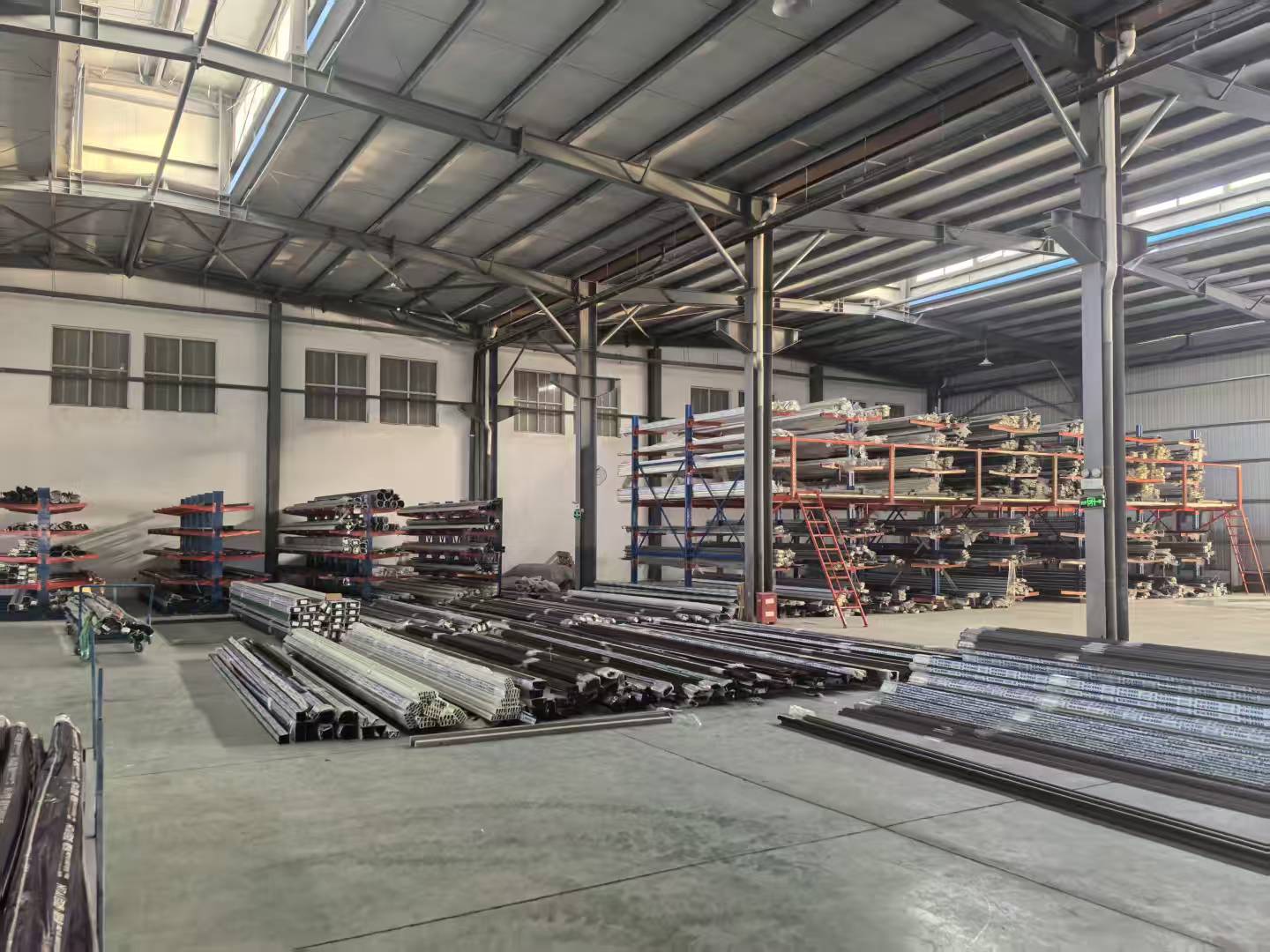
1. Anti-rust and weather resistance
6063-T5 aluminum alloy is the standard material for this product range, and the reason is metallurgical rather than cosmetic. Aluminum forms a stable oxide layer on its surface, so it does not behave like ferrous metal in the presence of moisture; the construction is documented as rustproof and corrosion free. That property is what makes the material viable on open, windy sites, in high-temperature rainy climates and in humid coastal or salt-fog areas where repainting is not a realistic maintenance strategy.
Material alone is not the finish. Before coating, profiles pass through pre-treatment — including pickling — and then receive a fluorocarbon and wood-grain transfer finish described by the manufacturer as UV, salt spray and rain resistant, with 20-year colour stability. The documented working condition for the smart pergola, courtyard fence and villa entrance gate range is outdoor installation with IP66 dust and water protection and an operating temperature range of -35 °C to 65 °C.
Water management is the practical test of any weather claim. On the louvered pergola, closing the louvers routes rainwater into integrated drainage channels and through an internal drainage system inside the posts. Installation quality and site drainage still determine the real-world result, which is why installation conditions are reviewed rather than assumed.
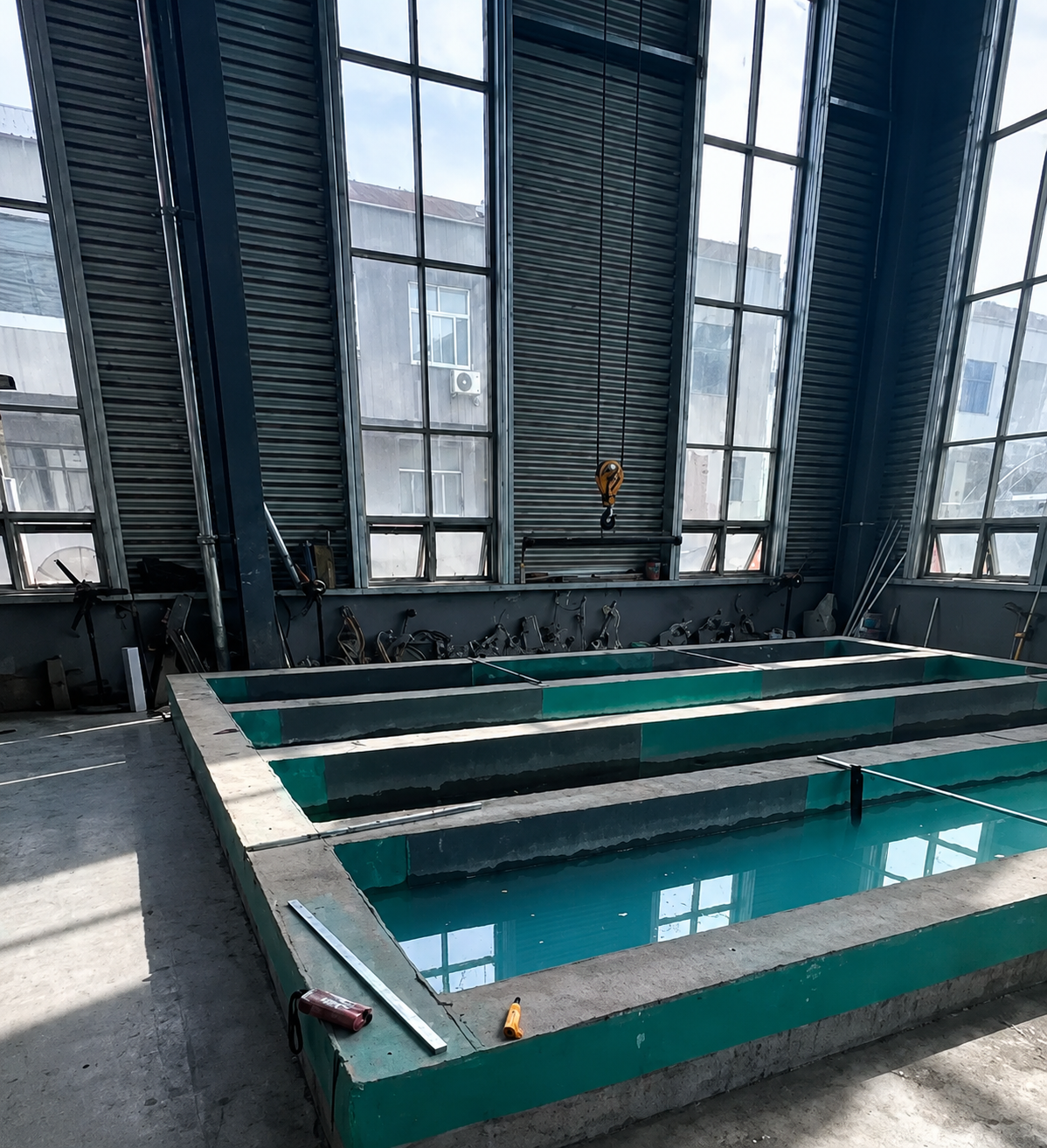
2. Structural stability
The documented rating framework for the aluminum bioclimatic pergola range is a snow load of 100 kg/m² and wind resistance of 120 km/h. Those figures are the reason the material logic works for a roof structure and not only for a fence panel: a louvered roof is a span, and a span has to carry load without losing geometry.
Two production controls keep that rating meaningful. Wall thickness is measured, and load-bearing wind resistance is tested — both listed among the standard inspection methods, alongside raw material composition testing and surface coating adhesion testing. Welding quality is the other half of the story, since joints are where a light frame either stays rigid or starts to work loose. The reference project data attributes high structural stability and long-term use without failure to the combination of alloy grade, profile specification and welding technology.
The boundary condition matters as much as the rating. Profile thickness is a customization item, so a documented snow and wind figure applies to the specified profile and configuration — not to any aluminum frame that happens to look similar.
3. Uniform surface finish
A courtyard is read as one composition, so a colour difference between the pergola, the fence and the gate is a visible defect even when each item is individually acceptable. Producing all three from one factory with unified profiles, colour codes and craft is what prevents the mismatch that appears when pergola, fence and gate are purchased separately from different suppliers.
RAL surface colour is a customization layer, and so are decorative patterns, hollow carving, louver and bar spacing, and hardware style. The material does not change when the colour changes — but the adhesion test does, which is why coating adhesion is inspected rather than assumed.
4. Low maintenance and the 15-year horizon
Maintenance is where the material argument becomes financial. The documented comparison notes for aluminum against wrought iron, solid wood and brick give an initial purchase cost 15% to 25% higher, zero annual anti-corrosion renewal cost, a replacement cycle extended 3 to 6 times, and an overall comprehensive cost reduced by 70% to 80% within 20 years. The same notes describe a maintenance workload reduced by roughly 90%, with no rust removal, repainting or seasonal upkeep — only regular light cleaning.
Those are comparison notes rather than a guarantee for every site, but the direction is consistent with the case record. That record covers a 15-year service duration, a 600-set project in the USA, and deliveries recorded across 10 countries — Australia, Belgium, Canada, Switzerland, France, the UK, Italy, Maldives, Singapore and the USA — spanning different regional climates. Durability claims that survive ten climates are more credible than durability claims made for one.
| Documented parameter | Value |
|---|---|
| Standard alloy | 6063-T5 aluminum alloy |
| Snow load (bioclimatic pergola range) | 100 kg/m² |
| Wind resistance (bioclimatic pergola range) | 120 km/h |
| Operating temperature range | -35 °C to 65 °C |
| Ingress protection for the automated range | IP66 dust and water protection |
| Minimum order quantity | 1 set |
| Standard delivery time | 30 days for confirmed orders |
| Monthly production capacity | 3,000 sets |
Step-by-Step Breakdown: From Alloy to Installed System
The material logic becomes a product through a fixed sequence, and each step exists to protect one of the four properties above.
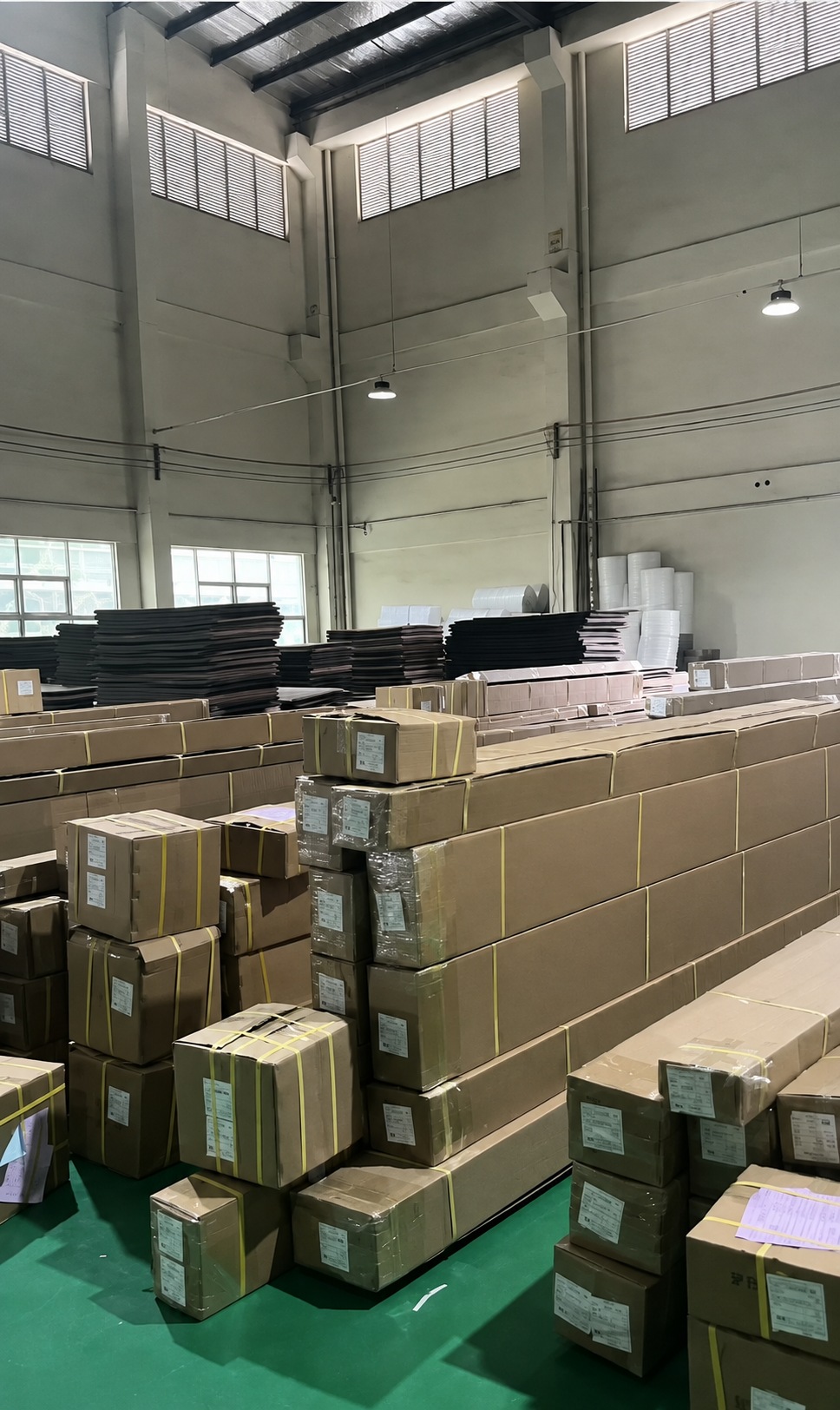
- Material intake and composition check. Raw material composition testing confirms the incoming alloy before any cutting begins; the warehouse holds 6063-T5 stock as the standard grade.
- Cutting and machining. Profiles are cut and machined to the project dimensions. Dimensional tolerance is inspected, because a louver roof and a gate leaf both depend on consistent geometry across many parts.
- Welding and frame assembly. Welded joints carry load and lock the frame square. Exquisite welding technology is recorded as a project highlight and is one of the differences between two frames built from the same alloy.
- Pre-treatment and coating. Pickling and preparation precede the fluorocarbon and wood-grain transfer finish. Colour is applied to a prepared surface; surface coating adhesion testing verifies the bond afterwards.
- Assembly, motor and electrical checks. Motor continuous operation ageing testing and waterproof performance testing are listed inspection methods for the automated range, alongside functional checks during assembly.
- Load, water and pre-shipment inspection. Load-bearing wind resistance testing and waterproof performance testing close the loop on the published ratings, and 100% pre-shipment testing is the documented acceptance criterion.
- Packing, shipping and installation support. Packaging inspection precedes dispatch, and installation drawings, remote installation guidance and remote system debugging support the site stage.
On the buyer side the sequence is shorter but just as rigid: confirm the material and profile, then confirm dimensions, then confirm the RAL colour and hardware, then confirm the automation layer, and only then compare prices. Reversing that order is how projects end up with a correctly priced gate that does not fit its opening.
Use Cases: Where the Material Logic Shows Up in Practice
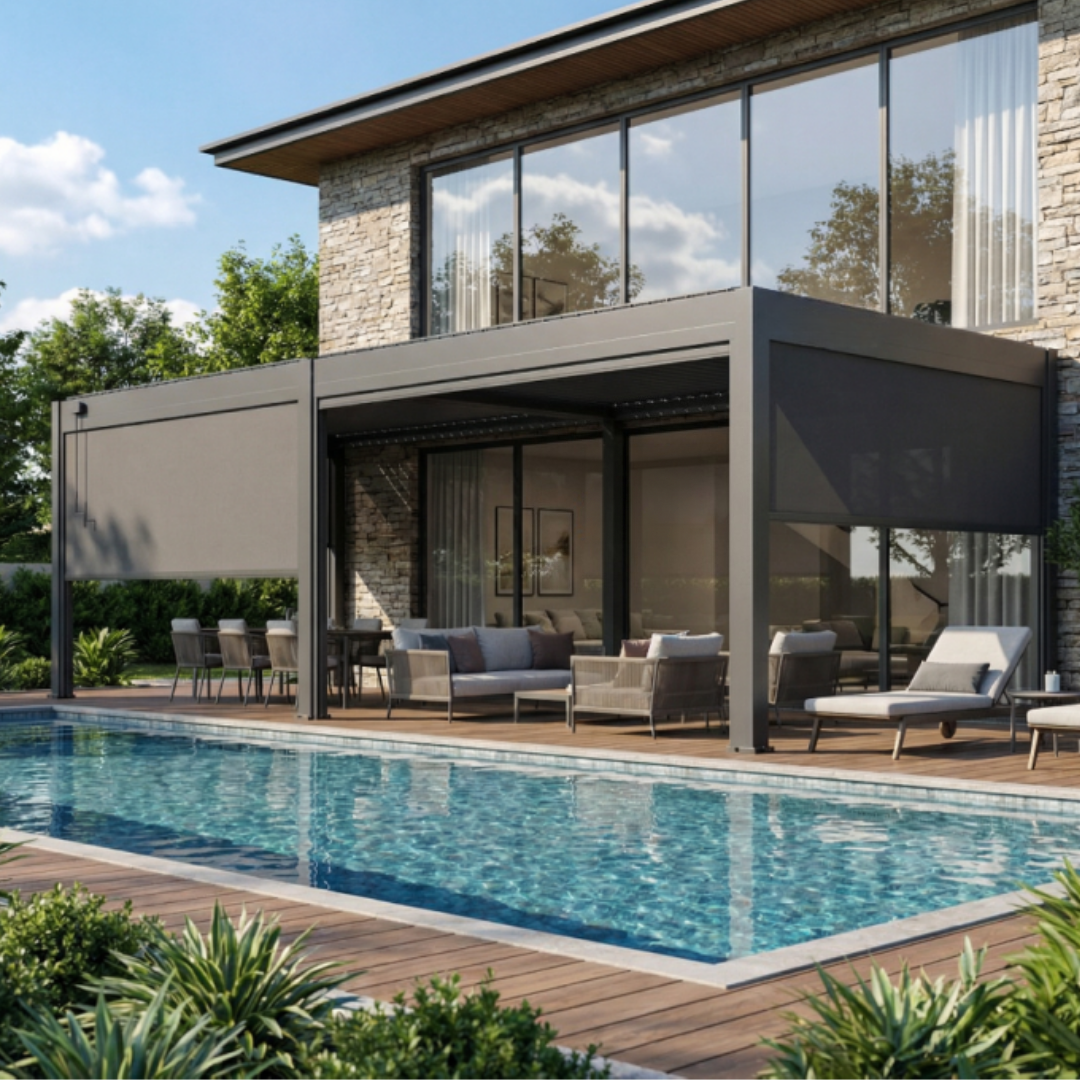
Villa courtyards with a mixed-material streetscape. A louvered pergola over a terrace, a privacy fence along the boundary and an entrance gate form one visual line. One profile source and one colour code keep that line consistent, which is why pergola, fence and gate are frequently specified together.
Poolside privacy screening. Louvered aluminum fencing uses angled slats to reduce direct visibility while maintaining airflow, which suits pool surrounds, patios and courtyards where solid screening would trap moisture and heat.
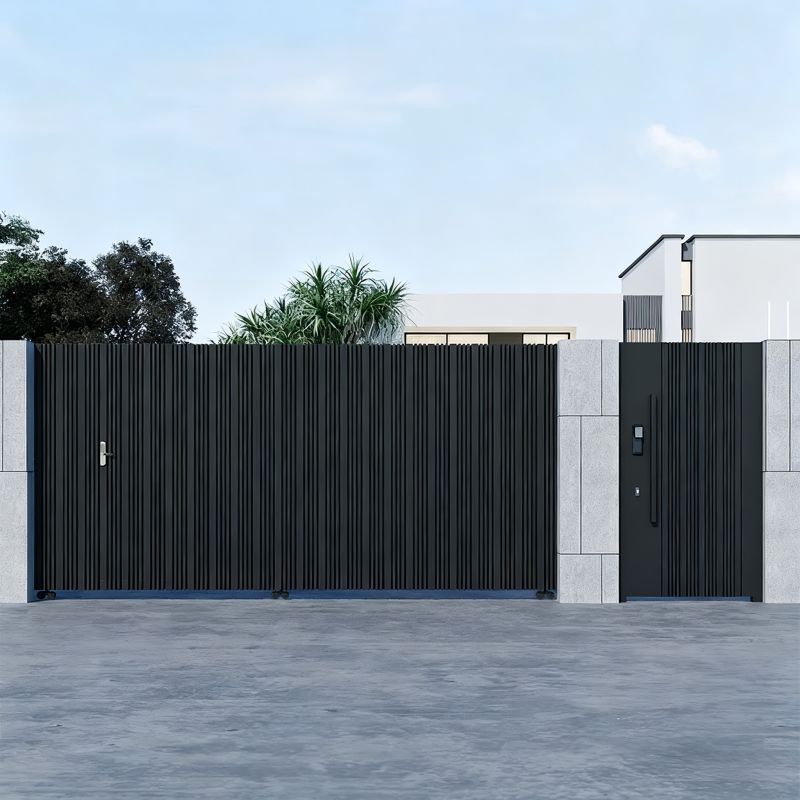
Driveway entrances with automation. Sliding gates suit entrances with lateral space beside the opening, swing gates suit sites with room for the leaves to travel, and bi-fold gates suit driveways with limited opening depth. Motor and control selection follows gate type, size, weight and installation conditions, with remote control, fingerprint, keypad, card and app access available as configuration options.
Hospitality and commercial terraces. A commercial electric pergola in Italy and a wall-mounted unit in Singapore illustrate two different climate problems solved with the same substrate — one seasonal, one humid year-round.
Coastal and high-humidity sites. Salt fog and constant humidity are the harshest test of any finish. Aluminum construction is documented as corrosion free, and the coating system is specified against UV, salt spray and rain, which is why coastal projects are the clearest demonstration of the material argument.
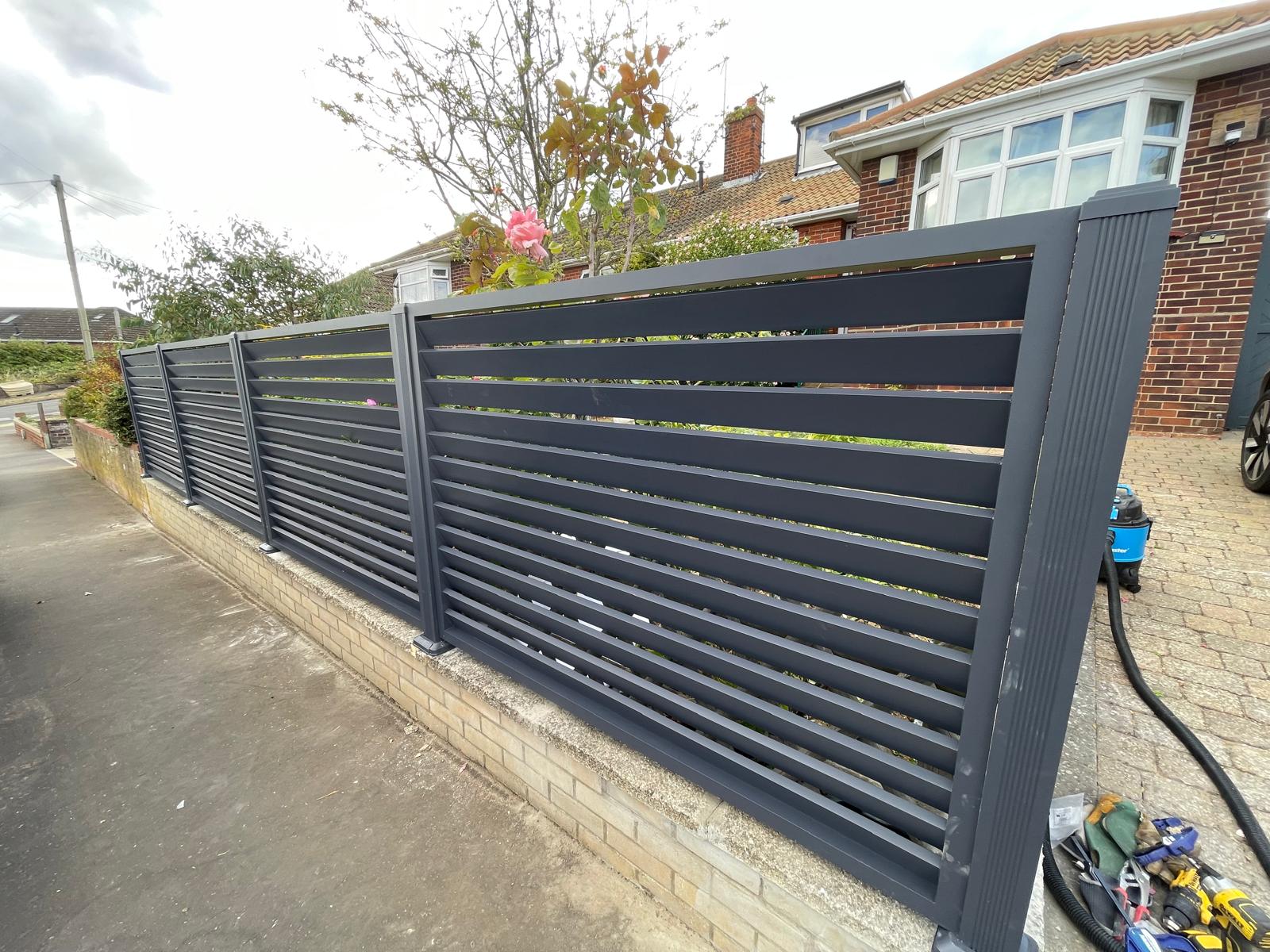
Comparison Table: Aluminum Against the Common Alternatives
The table below compares substrate behaviour, not brand performance. Aluminum entries reflect documented product data for this range; the other columns describe generally accepted behaviour for those material families and will vary by grade, treatment and site.
| Criterion | Aluminum alloy (6063-T5) | Timber | Steel (painted or galvanized) | Wood-plastic composite |
|---|---|---|---|---|
| Corrosion behaviour | Rustproof and corrosion free; specified for humid coastal and salt-fog areas | Prone to rot and insect attack where moisture is retained | Depends entirely on coating or galvanizing integrity; cut edges and fixings are the usual entry points | Generally moisture tolerant, but formulation and fixing quality vary widely |
| Maintenance rhythm | No annual anti-corrosion renewal; regular light cleaning only | Periodic sanding, treating or refinishing | Inspection and touch-up of coating or zinc layer | Occasional cleaning; long-term colour behaviour varies by product |
| Finish consistency across components | Unified profiles and colour codes from one factory; RAL colour as a customization layer | Natural variation between boards and batches | Consistent if coated in one batch; site touch-up can differ | Batch-to-batch colour variation is a known consideration |
| Structural behaviour | Documented snow load 100 kg/m² and wind resistance 120 km/h on the bioclimatic pergola range | Section size and moisture content drive movement and deflection | High strength, but weight increases motor and foundation demand | Deflection under span and heat is a design constraint |
| Weight and handling | Light enough for motorised gate and louver operation | Moderate to heavy depending on section | Heaviest of the four | Heavier than aluminum |
| Best fit | Long-term outdoor exposure, open windy sites, coastal and humid climates, matched pergola-fence-gate sets | Traditional or heritage contexts where appearance is the primary driver | Security-first applications with robust maintenance capacity | Projects seeking a timber look with reduced refinishing |
| Watch-outs | Ratings depend on the specified profile thickness and welding quality; installation and site drainage affect waterproofing | Refinishing cycle and moisture management | Corrosion at joints and fixings; weight | Confirm colour stability and fixing detail before specifying |
Configuration Is Not Material: What Actually Gets Customized
Once the substrate is settled, the customization layers decide how the product behaves on a specific site. For the aluminum pergola, customizable items include overall dimensions, profile thickness, surface coating colour, decorative pattern, gate opening mode, intelligent control system, accessory configuration, embedded logo engraving, roof style and fence spacing. For garden and aluminum fencing, they include overall dimensions, alloy profile thickness, RAL surface colour, hollow carving pattern, fence bar spacing, gate opening type, intelligent access system, lock and hardware style, engraved logo, anti-collision structure, bottom gap height and hidden installation fittings.
This is the distinction that gets lost in a first purchase. Choosing aluminum is a material decision; choosing a 120 km/h wind rating, a specific RAL colour, a 30-day delivery slot or a fingerprint reader is a configuration decision. Both matter, but only the second one is negotiable per project — and only the first one is expensive to change later.
FAQ
Which inspections and standards apply before an aluminum pergola, fence or gate order ships?
Documented inspection methods include raw material composition testing, wall thickness measurement and surface coating adhesion testing, together with load-bearing wind resistance testing, waterproof performance testing, motor continuous operation ageing testing and dimensional tolerance checks. Acceptance is based on pre-shipment testing, and 100% pre-shipment inspection is applied before delivery. The manufacturing system holds ISO 9001 quality system certification and CE product safety certification, and raw materials and finished goods are sampled in cooperation with authorised third-party testing institutions. Where a project requires a specific reference standard, EN 13561:2015 covers performance and safety for external blinds and awnings including pergola awnings in Europe, and ASTM F2957 covers ornamental aluminum fence systems in the USA.
Can a Chinese OEM manufacturer customize dimensions, RAL colour and automation within one order?
Yes. OEM and ODM production services are provided for aluminum pergola, aluminum fence and aluminum gate products, and OEM production services are available. Customization inputs can be CAD drawings, architectural plans, sketches, photos, dimensions or samples, supported by a 10-engineer R&D team inside a 30,000 m² facility with 120 staff and an annual output of approximately 36,000 sets. Pergola customization covers overall dimensions, profile thickness, surface coating colour, decorative pattern, roof style, louver spacing, accessories, embedded logo engraving and intelligent control; fence and gate customization covers RAL surface colour, profile thickness, bar spacing, hollow carving, opening type, intelligent access, hardware style and hidden installation fittings. Because pergola, fence and gate can be produced in one factory with unified profiles and colour codes, the three components can be delivered as a matched set rather than three separate colour guesses.
What is the minimum order quantity and how is a custom aluminum project quoted?
The minimum order quantity is 1 set. Quotations are built from confirmed drawings and the chosen configuration layers rather than from a catalogue price, because profile thickness, RAL colour, louver or bar spacing and automation options all change the material and labour content. Commercial terms are documented as payment 50/50, with delivery terms available as FCA, FOB, CIF, DAP or DDP. On cost, the manufacturer's comparison notes record an initial purchase cost 15% to 25% higher than traditional materials, offset by zero annual anti-corrosion renewal cost and a comprehensive cost reduction of 70% to 80% within 20 years.
What information should be sent before drawings and a quotation are prepared?
For an accurate design, buyers should provide the clear opening width and height, preferred gate or pergola type, quantity and site photos. For automatic gates, information about the ground condition, posts or walls, available side space and power supply location is also needed, and the opening direction should be confirmed before final production drawings are issued. Accurate site information allows the gate structure, opening direction and motor installation to be evaluated before production. Drawings can be prepared and confirmed according to project dimensions and requirements, and buyers who want to verify finish and joint quality first can raise sample arrangements with the supplier before committing to a full order.
What lead time and production capacity apply to OEM aluminum pergola orders?
Standard delivery time is 30 days for confirmed aluminum pergola and aluminum fence orders. Monthly production capacity is 3,000 sets, and the export record covers the USA, Italy, France, Canada, the UK, Australia and Germany, with case deliveries recorded across 10 countries including Australia, Belgium, Canada, Switzerland, France, the UK, Italy, Maldives, Singapore and the USA. Buyers planning a multi-unit project can confirm the production slot together with drawings so that the delivery date is fixed against the same approved specification.
Conclusion: Settle the Material, Then Design the Product
Aluminum is the base material for outdoor pergolas, fences and gates because it resolves four constraints simultaneously: it does not rust, it carries documented structural ratings of 100 kg/m² snow load and 120 km/h wind resistance on the bioclimatic pergola range, it holds a uniform coated finish across every component produced from one profile source, and it reduces maintenance to light cleaning over a service life recorded at 15 years. The 10-country delivery record, including markedly different climates, is the practical evidence behind that reasoning.
What follows the material decision — overall dimensions, profile thickness, RAL colour, louver or bar spacing, gate opening mode, intelligent access, LED lighting and accessories — is configuration. Configuration should be negotiated openly and priced transparently; the material should be decided once, correctly, because it is the only decision on the list that cannot be adjusted after installation.
Next Step
If you are specifying a matched aluminum pergola, fence and gate set for a villa, hospitality or municipal project, the fastest way forward is to send dimensions and site photos for a drawing review and quotation.
Download the full product catalogue: Junsu Products Catalog (PDF)
Website: www.junsu-outdoor.com
Email: JunSu@junsutech.com · Tel / WhatsApp: +86 135-2556-8065